

Egyptian-Japanese University Board Meeting Opens with Minister’s Remarks
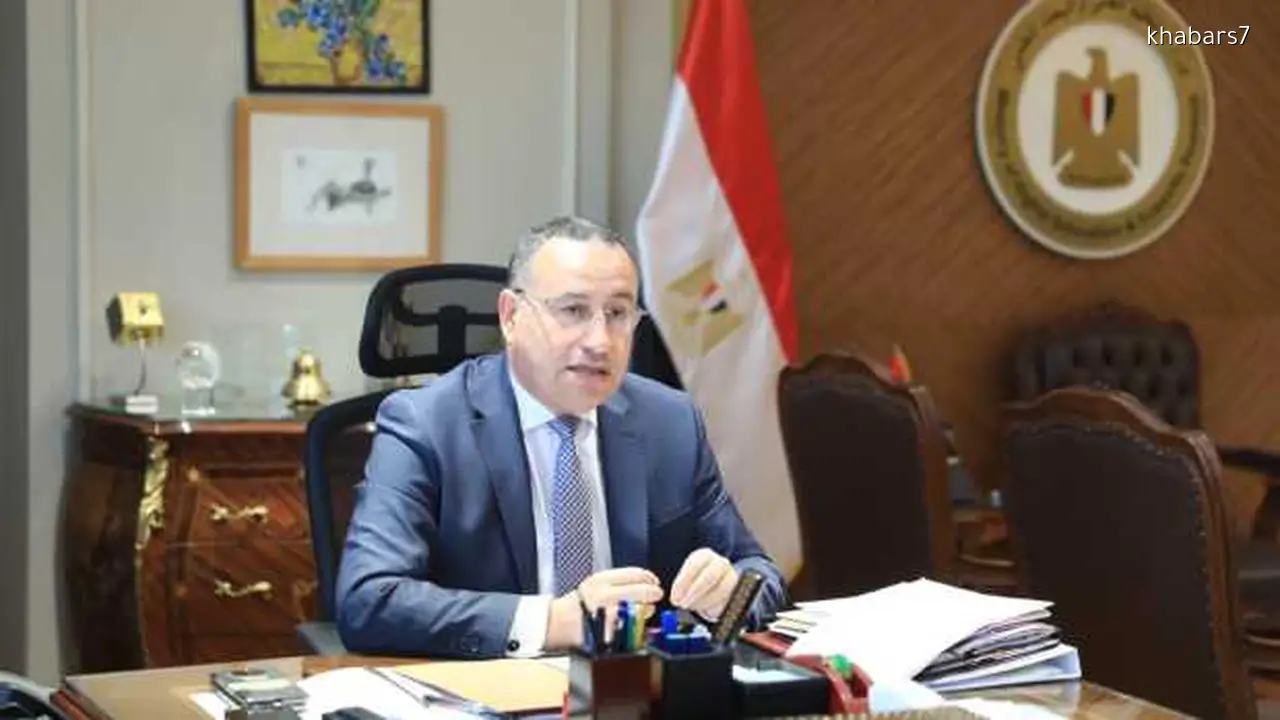
Dr. Abdelaziz Qansoua, Egypt’s Minister of Higher Education and Scientific Research, inaugurated the 32nd meeting of the Board of Trustees of the Egyptian-Japanese University of Science and Technology (E-JUST) via video conference.
The meeting was chaired by Dr. Hani Helal, former Minister of Higher Education and Scientific Research and current Chairman of the Board, alongside Ms. Yuko Matsui, Deputy President of the Japan International Cooperation Agency (JICA), with attendance from Dr. Amr Adly, President of the university, at its campus in Borg El Arab.
In his address, Dr. Qansoua expressed his pleasure in participating in the meeting, not only as a minister but also as a former active member of the university’s Board of Trustees. He highlighted his deep appreciation for the significant achievements made by E-JUST throughout its history.
Dr. Qansoua reaffirmed the ministry’s continued support for E-JUST as a successful model for educational and research collaboration between Egypt and Japan, enhancing its status as a leading institution in scientific research and innovation.
He also praised Hiroshima University for signing a memorandum of understanding and an executive agreement with E-JUST to launch a dual master’s program in semiconductors, describing this milestone as a reflection of their shared commitment to preparing high-caliber human resources in one of the most strategically important technological fields.
The minister emphasized the need to expand these partnerships across Egypt’s higher education system while stressing the importance of international collaborations with prestigious universities.
Additionally, he pointed out an agreement to establish a “Center of Excellence for Semiconductor Manufacturing” within E-JUST in cooperation with Hiroshima University, which aims to be a leading platform for advanced scientific research, technology development, and capacity building in this critical sector for economic growth and technological sovereignty.
Dr. Qansoua urged the exploration of creating an industrial zone at the university that could transform research outputs into economically viable applications and industries. This initiative is intended to provide a real model for integrating scientific research, technology, entrepreneurship, and advanced manufacturing—contributing to Egypt’s position as a regional hub for technological industries and knowledge-based economies.
The meeting also included participation from Yasuhiro Tsukamoto representing the Japanese embassy, Dr. Shoji Hashimoto, Vice President for Regional and International Affairs at E-JUST, Dr. Ahmed El-Sabbagh, Vice President for Education and Academic Affairs at E-JUST, Dr. Fukuda, Vice President for Scientific Research at E-JUST, along with other board members from both Egyptian and Japanese sides as well as deans from various faculties and research centers at the university.
A delegation from Egypt was also present at the meeting including Dr. Ahmed Zayed, Director of Bibliotheca Alexandrina; Dr. Ahmed Abdelhakim, Acting President of Alexandria University; Dr. Walaa Sheta, CEO of the Science Technology and Innovation Funding Authority; Ambassador Noha El-Gabaly representing the Ministry of Foreign Affairs; Dr. Ahmed El-Gohary, founding president of E-JUST; Engineer Mohamed El-Araby, Chief Operating Officer at El-Araby Group; along with representatives from Hiroshima University including Dr. Kaneko Shinji and Dr. Shimizu Shoji representing Kyushu University.
Comments