

Egypt’s Water Ministry Discusses Global Drought Linked to El Niño Phenomenon
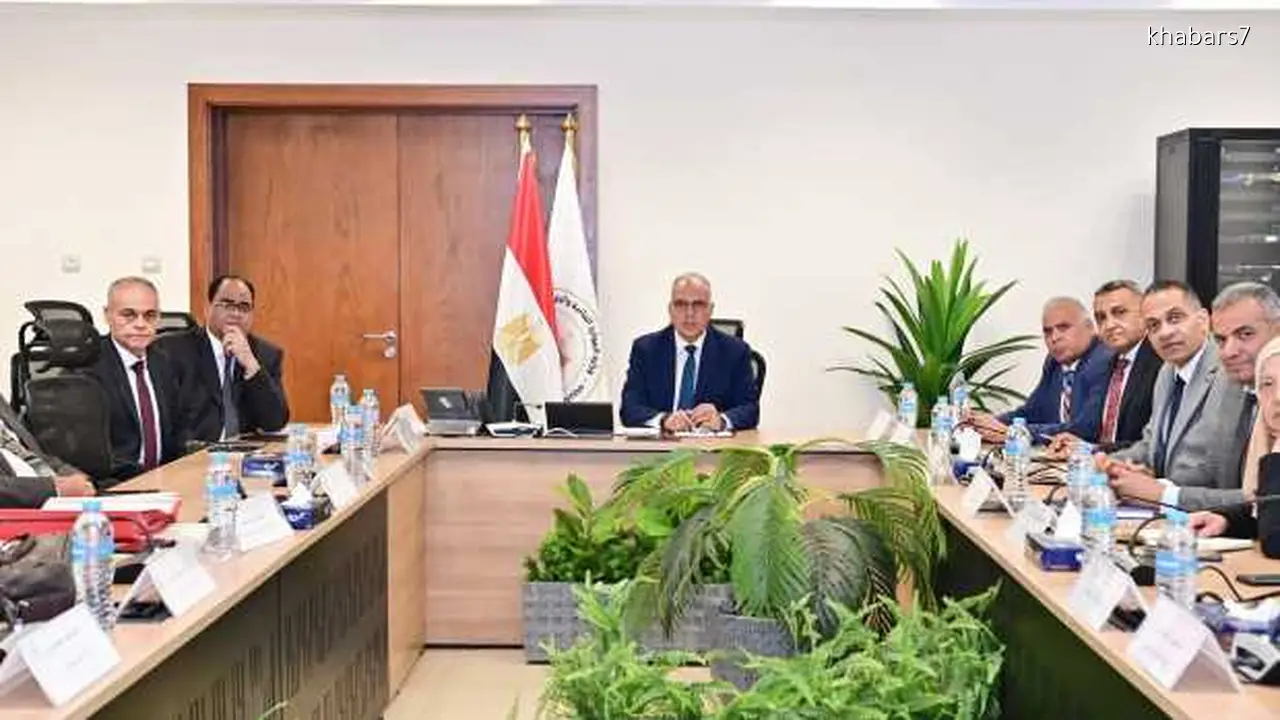
A meeting of the Permanent Committee for Regulating the Nile River’s Flow was held under the leadership of Dr. Hani Sewilam, Egypt’s Minister of Water Resources and Irrigation, with participation from several ministry leaders and officials from the National Water Research Center.
The committee convened to assess the current status of Nile water flow and the hydrological condition of the river. Key topics included determining the water volumes reaching Lake Nasser, monitoring operations at the High Dam, and managing water levels and discharges during this period.
Additionally, the committee discussed developments regarding the El Niño phenomenon, which is characterized by periodic increases in sea surface temperatures in the central and eastern Pacific Ocean, alongside its potential impact on global temperature patterns, rainfall, and drought conditions.
In this context, ministry agencies are actively monitoring and analyzing the possible effects of global climate phenomena on Nile water flow through advanced mathematical models, satellite imagery, and recent scientific studies. Preparations are underway for summer, anticipating increased water demand for drinking, agriculture, and industry.
The meeting also reviewed current water demand levels and highlighted efforts by ministry agencies to manage water resources flexibly. This includes conducting necessary operational balances on main weirs and barriers while ensuring efficient operation of pumping stations to meet required levels across irrigation canals.
Successes achieved in meeting water needs efficiently during the Eid al-Adha holiday were also presented, attributed to efforts made by ministry agencies during this period.
Dr. Sewilam emphasized the importance of dynamic management of water resources based on real-time monitoring in upper Nile regions. He called for utilizing cutting-edge mathematical models for hydrological forecasts alongside satellite imagery analysis to enhance resource management efficiency and monitor discharges continuously based on all usage needs and network capacity.
The minister directed ministry agencies to work around the clock to ensure smooth operations across irrigation and drainage departments nationwide. This includes ongoing cleaning of canals and drains based on actual needs while ensuring readiness of sectors, waterways embankments, relevant stations, and emergency units to promptly address any new developments. This strategy aims to maintain appropriate levels at intake points for drinking water supply and electricity generation.
Comments