

Egypt’s Comprehensive Plan to Combat Desertification and Drought

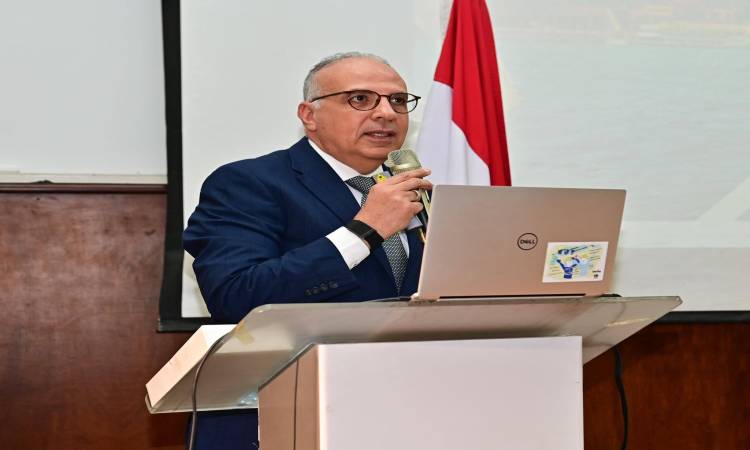
Dr. Hani Sweilem, Minister of Water Resources and Irrigation.
Dr. Hani Sweilem, Egypt’s Minister of Water Resources and Irrigation, has emphasized that tackling desertification and drought is a national priority closely linked to water issues. He stated that the ministry is implementing a comprehensive package of projects and measures under the second generation of the water system 2.0 aimed at enhancing the efficiency of water resource usage, developing unconventional water resources, and strengthening the country’s capacity to adapt to climate changes. These efforts contribute to protecting agricultural land and achieving both water and food security, coinciding with World Day to Combat Desertification and Drought.
These initiatives come amid increasing challenges posed by climate change on global water resources and agricultural lands. Estimates from the United Nations Convention to Combat Desertification indicate that drought could affect over three-quarters of the world’s population by 2050, necessitating enhanced efforts towards sustainable water resource management and land protection from degradation.
Dr. Sweilem highlighted the ministry’s significant focus on expanding projects for treating and reusing agricultural drainage water as a key strategy for developing unconventional water resources. This approach provides additional water sources that support agricultural expansion plans, land reclamation, and help mitigate desertification risks while bolstering food security.
The ministry is also continuing its projects for harvesting rainwater and floodwater across various governorates, aiming to maximize the benefits from available water resources by storing it instead of losing it, thus maintaining local community stability.
Special attention is being given to sustainable management of groundwater in desert areas through technical studies on managing groundwater reserves while monitoring extraction rates. The ministry is expanding the application of modern irrigation systems to improve water usage efficiency, ensuring this vital resource is preserved for future generations while supporting sustainable agricultural development.
To ensure timely access to irrigation for agricultural lands—considered the first line of defense against desertification—the ministry annually cleans approximately 33,000 kilometers of canals and 22,000 kilometers of drains. This maintenance guarantees improved water flow and efficient delivery to beneficiaries.
The ministry continues to upgrade lift stations nationwide through replacement, renewal, and continuous modernization of electromechanical equipment while enhancing operational efficiency. Additionally, there is a push towards using solar energy at these stations to improve operations, reduce energy consumption, and lower carbon emissions in support of national efforts towards climate adaptation and transitioning to a green economy.
Utilizing cutting-edge technologies including geographic information systems (GIS), satellite imagery, predictive models, and early warning systems allows for effective monitoring of water resources and assessment of climate impacts. This supports informed decision-making for efficient water management in anticipation of extreme weather events.
As part of national efforts to adapt to adverse climate change effects, the ministry continues implementing projects aimed at protecting Egypt’s coastlines from rising sea levels and rapid climate changes. Numerous initiatives have been undertaken in Alexandria, Matrouh, Kafr El Sheikh, Beheira, Port Said, Dakahlia, New Damietta, and Ras El Bar—efforts that protect coastal agricultural lands from erosion and salinization while preserving their productivity as well as safeguarding coastal communities and existing infrastructure investments.
The ministry has successfully executed environmentally friendly projects that protect approximately 69 kilometers of Delta coastlines while continuing new initiatives aimed at enhancing coastal resilience against climate change impacts.
Additionally, there is a strong emphasis on building human capacity by developing technical skills among professionals in the water sector through specialized training programs alongside expanding water technology schools. This ensures future generations are equipped with modern technological advancements necessary for sustainable resource management.
The Ministry of Water Resources and Irrigation asserts that combating desertification extends beyond merely protecting land; it encompasses safeguarding natural resources as well as ensuring both water and food security. This requires ongoing collaborative efforts along with raising awareness about the importance of conserving every drop of water as fundamental for development and life.
Comments