

Local Development Minister Emphasizes Collaboration with Arab Organizations
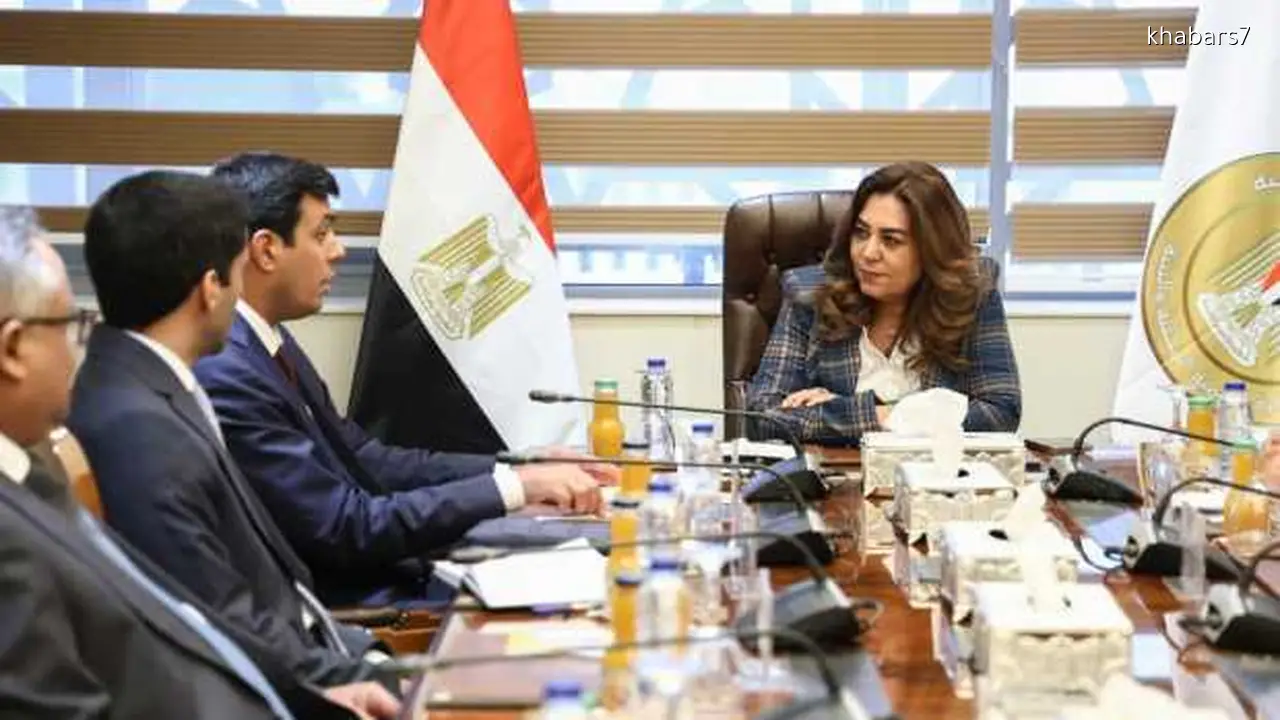
Dr. Manal Awad, the Minister of Local Development and Environment, met with Badr Wael Al-Ajil Al-Askar, the Secretary-General of the Arab Cities Organization, along with his accompanying delegation at the ministry’s headquarters in the New Administrative Capital.
The meeting was attended by Dr. Hisham Al-Halabi, Assistant Minister for National Projects; Ambassador Hossam Al-Qawish, Assistant Minister for International Cooperation; and Dr. Naglaa Al-Adly, Head of the Central Administration for Human Resources and Supervisor of International Cooperation at the ministry. From the organization, Abdullah Saud Al-Rashed, Head of External Affairs and Partnerships, and Fahd Al-Tamimi, Financial Director of the organization, also participated.
During the initial part of the meeting, Minister Awad welcomed the Secretary-General on their first encounter and extended her heartfelt congratulations on being appointed Secretary-General of the Arab Cities Organization by unanimous agreement from the Executive Council of Kuwait. She wished him success in leading the organization during this upcoming phase.
Dr. Manal Awad emphasized her ministry’s commitment to enhancing cooperation in exchanging successful experiences and training with specialized Arab organizations affiliated with the League of Arab States in areas related to local governance and environmental management. She highlighted that this collaboration aims to maximize benefits for human resources, thereby improving services provided to citizens and enhancing their quality of life.
The minister referenced several successful initiatives undertaken by Egypt under President Abdel Fattah El-Sisi’s leadership during recent years. These initiatives include eradicating informal settlements, establishing smart cities linked to older urban areas, waste management systems, as well as promoting environmental and rural tourism and market development.
Furthermore, she expressed eagerness to initiate coordination between both parties to benefit provinces and ministries, especially following the merger of the Ministries of Local Development and Environment. She highlighted potential collaboration between the organization and the Local Development Training Center in Saqqara for exchanging expertise and training programs aimed at empowering personnel in cities, provinces, and municipalities across the Arab world to tackle challenges effectively.
The minister also mentioned opportunities for joint cooperation on various environmental issues between the Arab organization and the Center for Environment and Development for the Arab Region and Europe (CEDARE), which includes Arab environment ministers based in Cairo. This collaboration would focus on preserving natural reserves while addressing climate change impacts as well as urban development challenges.
In response, Badr Wael Al-Ajil Al-Askar expressed his gratitude to Minister Awad for convening this meeting. He wished her success following her appointment by political leadership as Minister of Local Development and Environment in the new government. During their discussion, he outlined various operational areas within the organization that concern local governance, environment issues, youth sports initiatives, and smart city developments.
He noted that the Arab Cities Organization is an independent regional non-governmental entity focused on city affairs across Arab countries. Founded on March 15, 1967, its permanent headquarters is located in Kuwait. Currently, it includes 24 Egyptian governorates among its members along with approximately 650 cities and municipalities from various Arab nations. He expressed eagerness from the organization to exchange experiences with the ministry through training workshops aimed at developing capabilities within operational sectors that support cities in overcoming developmental challenges while achieving comprehensive sustainable development goals.
Al-Ajil Al-Askar welcomed potential coordination with the ministry to bolster capabilities within local development sectors across Arab nations while benefiting from Saqqara Training Center’s expertise. He encouraged further participation from other Egyptian governorates within this regional framework.
In conclusion, both parties agreed to intensify coordination efforts moving forward to exchange experiences effectively while building capacities for successful practices among Egyptian and Arab cities utilizing resources from both central offices as well as other organizational offices throughout various cities regarding all matters related to urban governance.
Comments