

Education as a Tool for Peace: Insights from the Mediterranean Technical Forum
 Mediterranean Countries" width="750" height="450" />
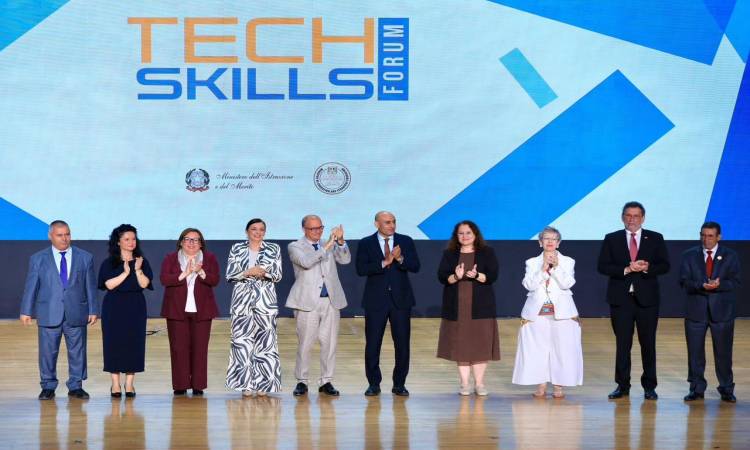
Closing session of the Technical Education Forum for Mediterranean Countries.
Mohamed Abdel Latif, Egypt’s Minister of Education and Technical Education, alongside Dr. Giuseppe Valditara, Italy’s Minister of Education and Merit, attended the closing session of the Technical and Vocational Education Forum for Mediterranean Countries held in the New Administrative Capital on June 5 and 6.
The forum brought together education ministers, representatives from governments and international organizations, as well as industry and technology sectors from Mediterranean nations, along with heads of participating delegations.
In his closing remarks, Abdel Latif emphasized that education has evolved beyond being merely a foundation for opportunity and development; it has become one of the strongest tools supporting peace, prosperity, and collective human progress.
The minister noted that the forum reflected a shared vision emphasizing the necessity of prioritizing technical and vocational education in national and regional development agendas. He highlighted that the world is experiencing rapid transformations driven by modern technology, artificial intelligence, green transitions, and global competition for talent. Consequently, investing in students’ skills and creativity is vital for future economic success.
Abdel Latif articulated that the forum conveyed an important message: the Mediterranean is not just a geographical area but a cultural bridge connecting peoples. The countries bordering it share a common history and similar aspirations for a future grounded in growth, solidarity, prosperity, and peace.
The discussions at the forum revealed a broad consensus among participating nations regarding shared aspirations. These countries aim to develop educational systems that are more responsive to labor market needs, closely linked to industry, open to innovation, and capable of preparing youth for dignified work and responsible citizenship. Furthermore, there is a collective responsibility to ensure that technological benefits and economic transformation reach all learners rather than just a privileged few.
In this context, he pointed out that the “Cairo Declaration,” issued at the forum’s conclusion, represents an important political and strategic milestone. It is not merely a final document but reflects shared intentions and regional commitment to continued cooperation between Northern and Southern Mediterranean countries in technical education and skills development. The declaration underscores that skill development and technical education are foundational pillars for achieving future stability and prosperity in the region.
He stressed that collaboration among governments, educational institutions, industry partners, and international stakeholders is crucial for building more efficient and sustainable educational systems. The Mediterranean can become not only a space for history and culture but also for innovation, opportunities, and joint development.
Abdel Latif highlighted that the importance of the declaration lies in its clear message: readiness for the future is no longer solely a responsibility of individual nations; it requires deeper coordination and stronger partnerships to address common challenges such as artificial intelligence, climate change, migration issues, demographic shifts, youth employment, and industrial transformation aimed at equipping future generations with necessary skills.
The minister expressed pride in Egypt hosting this inaugural edition of the Technical Education Forum for Mediterranean Countries while appreciating fruitful cooperation with Italy and all participating partners who contributed to its success.
He also expressed hope that efforts initiated in Cairo would evolve into sustainable processes of dialogue, cooperation, and joint action. He stated that this forum should be remembered not just as a meeting of delegations but as a moment when Mediterranean countries chose to look toward the future together.
He called on participants to make the “Cairo Declaration” a launching point for future partnerships, joint initiatives, and institutional cooperation aimed at providing better pathways and opportunities for youth across various countries in the region.
In closing his remarks, Abdel Latif extended deep gratitude to Italy’s Minister of Education and Merit along with ministers, delegations, ambassadors from industry representatives to students organizers. He affirmed that the forum successfully inaugurated a new chapter in Mediterranean cooperation regarding technical education and future skills development. The journey will continue “from education to the future” with confidence in solidarity toward a more prosperous future for regional peoples.
On his part during his speech at the forum’s conclusion, Italian Minister Valditara underscored the importance of enhancing regional and international cooperation in technical vocational training as one of the fundamental pillars for achieving sustainable development while empowering youth through increased employment opportunities.
He noted that there was widespread agreement among participating nations on unifying efforts to address common challenges while strengthening partnerships linking education with labor market needs—supporting innovation while enhancing educational system efficiencies across regional states.
The Italian minister affirmed that the declaration issued by this forum represents an important step toward solidifying mutual cooperation while enhancing integration within technical vocational fields. He emphasized investing in human capital by equipping new generations with skills needed to keep pace with rapid technological advancements.
He also called for enhanced collaboration between educational institutions and business sectors while expanding research innovation horizons through sharing experiences best practices among participating countries—contributing towards building more efficient resilient educational systems.
At his speech’s end he welcomed student initiatives proposed during this forum including “Mediterranean Schools Network”, considering it an exemplary model promoting communication collaboration among educational institutions throughout Mediterranean nations while fostering trust understanding bridges between youth.
The Italian Minister reiterated this forum marks genuine launchpad promising regional collaboration path within technical vocational education stressing his country’s commitment supporting these efforts advancing joint actions turning outcomes into practical initiatives on ground level.
He concluded by underscoring continuing dialogue coordination between participating states achieving shared goals developing education building brighter futures generations ahead.
During this closing session participants from various Mediterranean countries presented recommendations reflecting their vision regarding technical vocational education’s future emphasizing importance strengthening regional international collaborations adapting digital transformations artificial intelligence applications supporting sustainable development endeavors.
Comments