

First Mediterranean Technical and Vocational Education Forum Launched in Cairo
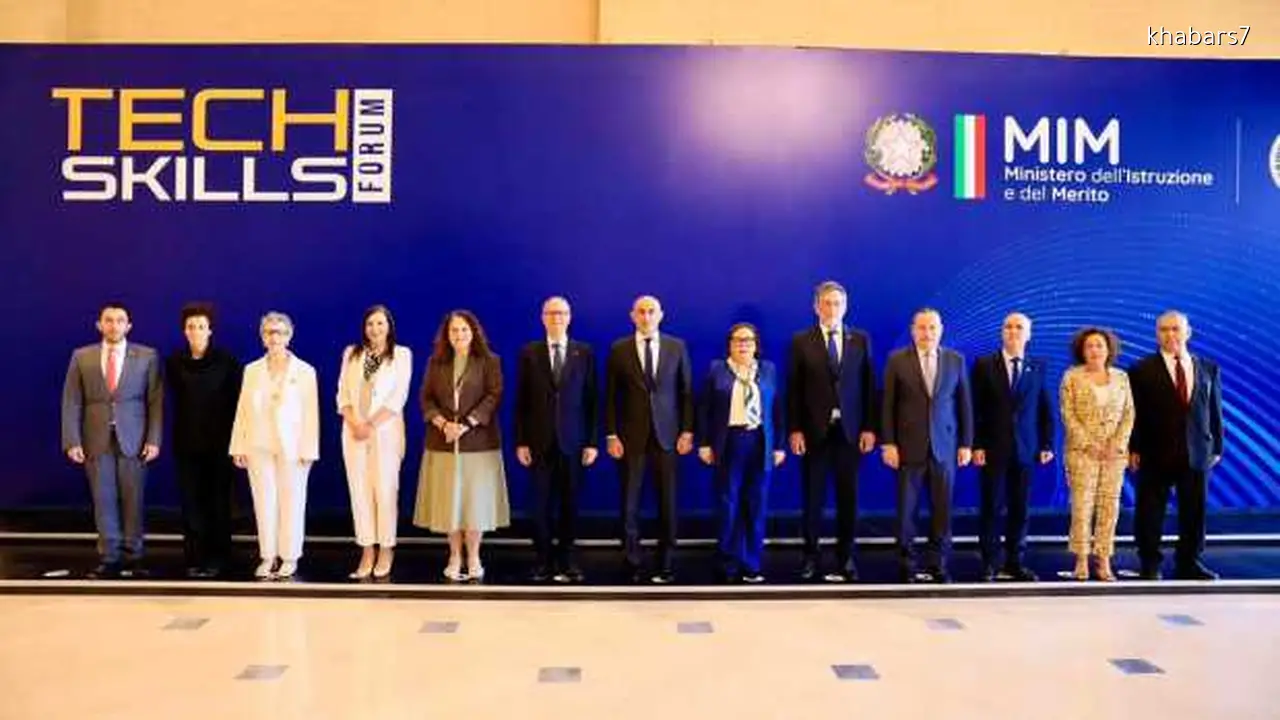
The inaugural “TechSkills Forum” for Mediterranean countries commenced today in the New Administrative Capital of Egypt, organized by the Egyptian Ministry of Education and Technical Education in collaboration with Italy’s Ministry of Education and Merit. The forum will run until Saturday, June 6, 2026.
Notable attendees include Dr. Abdel Aziz Qansoua, Minister of Higher Education and Scientific Research, along with education ministers and delegations from Cyprus, Croatia, Greece, Romania, Spain, Albania, Bosnia and Herzegovina, Montenegro, Algeria, Libya, Lebanon, as well as representatives from Egypt and Italy. The event also sees participation from ambassadors, diplomatic mission representatives, members of the Egyptian and Italian industrial unions, vocational education institutions, private sector partners, international organizations, and students.
This forum serves as a leading regional platform to enhance dialogue and cooperation among Mediterranean countries in technical education and skill development. It aims to prepare generations capable of adapting to rapid technological changes and future labor market demands while fostering partnerships between educational institutions and the industrial sector for sustainable development.
The opening session featured a keynote address from the Minister of Education and Technical Education. He expressed his delight at hosting the Mediterranean Technical and Vocational Education Forum in Cairo. He emphasized that participants have gathered not only to inaugurate a regional forum but also to initiate a collective dialogue about the future of education, work, skills, and human capital in the Mediterranean region.
The minister highlighted his pride in collaborating with Dr. Giuseppe Valditara, Italy’s Minister of Education and Merit. He noted that shared commitment was essential in launching this significant initiative and expressed gratitude towards the Italian government for its vision and cooperation.
He welcomed ministers and heads of delegations from various Mediterranean countries, stating that their participation gives true meaning to the forum. It reflects a shared belief that education is no longer just a national priority but has become a regional responsibility and a joint investment in stability, prosperity, innovation, and opportunity.
He pointed out that the world is at a pivotal moment where rapid technological changes such as artificial intelligence (AI), digital transformation, climate challenges, and shifting labor markets are reshaping the future of work and learning. He asserted that a nation’s strength increasingly depends on its people’s skills.
The Minister clarified that while natural resources, infrastructure, and investments remain important factors for competitiveness, they are no longer sufficient alone. The true driver of competitiveness lies in human capital through preparing youth who can think creatively, adapt to change, communicate effectively, solve problems using technology, and contribute productively to their communities.
Abdel Latif stated that technical education and vocational training have transitioned from being secondary options to strategic pathways for employment, innovation, productivity, entrepreneurship, and social mobility. They represent powerful tools directly linking education with real economic needs.
This approach is a core part of Egypt’s national reform agenda. Under President Abdel Fattah El-Sisi’s leadership, Egypt has prioritized human development within its national progress strategy. The Ministry aims not only to provide knowledge through schools but also to build skills, values, discipline, creativity while preparing students for the future.
He added that technical education is fundamental to this vision as Egypt continues efforts to modernize its technical education system by strengthening partnerships with industry expanding applied technology schools while improving curriculum relevance to real-world needs. The clear goal is to provide every young person with dignified opportunities for learning work growth while contributing to community development.
The minister noted that historically the Mediterranean region has been a space for cultural exchange trade knowledge scientific collaboration emphasizing that it has an opportunity today to renew this historical role by building partnerships focused on future skills.
He expressed pride in Egypt hosting the forum alongside Italy while ensuring technical education gains the recognition it deserves as one of the main drivers for development human building innovation shaping the future.
Dr. Giuseppe Valditara also expressed his satisfaction at launching this first Mediterranean Technical Vocational Education Forum alongside Minister Mohamed Abdel Latif highlighting how this collaborative initiative between Egypt Italy reflects a vision based on dialogue mutual trust between northern southern shores of the Mediterranean.
The Italian minister pointed out that broad participation underscores its strategic value impact reflecting shared belief that major transformations challenges facing today’s world require collective action solidarity responsibility towards unified vision for future generations.
He elaborated on how profound rapid changes driven by technology particularly AI along with digital energy environmental transitions evolving labor markets create an increased demand for advanced skills reshaping economies societies.
Valditara stressed these challenges cannot be addressed individually underscoring importance working together towards growth progress adding that this forum transcends mere discussions or exchanging views serving instead as platform facilitating strategic dialogue among countries sharing common interests making Mediterranean area space development advancement emphasizing collective responsibility towards youth generations communities’ futures.
The minister showcased Italy’s innovative reform model applied within technological vocational education through “4+2” system higher technical institutes explaining how this model strengthens ties between education labor market fosters personal skill development supports innovation research enhances international character modern flexible educational training systems while keeping individual school mission central focus.
Concluding his remarks Valditara expressed confidence discussions throughout two days will bolster dialogue among participating nations support new forms collaboration across fields including education training technology skills human capital development.
The forum’s opening ceremony featured an artistic welcome performance showcasing violin music accompanied by visual effects inspired by Mediterranean beauty celebrating values dialogue cooperation shared cultural identity through arts education followed by formal entry ceremony displaying flags representing all participating nations’ students involved in event.
A documentary film showcased student contributions highlighting innovative workshops designed specifically for vocational educators students from various Mediterranean nations focusing on vocational training themes enhancing cultural exchange experience creativity interdisciplinary thinking alongside boosting essential digital competencies required for future professions.
Two additional documentaries highlighted Egypt’s pioneering experience developing technical education through applied technology schools which have become successful partnership models between Ministry private sector providing advanced practical training aligned with job market needs.
The films also showcased Egyptian-Italian collaboration supporting initiatives enhancing skills development expanding Italian language instruction competency-based educational pathways preparing qualified personnel future opening wider opportunities youth learning working connecting globally elevating Egypt’s status regional hub skill-building human capital within Mediterranean context.
During opening activities several students presented symbolic fabric representing element reflecting history civilizations Mediterranean peoples showcasing meanings tied goods knowledge stories ideas exchanged over centuries while also featuring presentation titled “Voices Schools on Skills Manufacturing” where students teachers shared their joint vision production chains within region emphasizing required technical vocational skills adapting changing labor market dynamics highlighting role vocational training preparing qualified personnel supporting industrial development.
Comments