

Red Sea Jojoba Project Showcases Green Economy and Sustainable Development, Says Minister
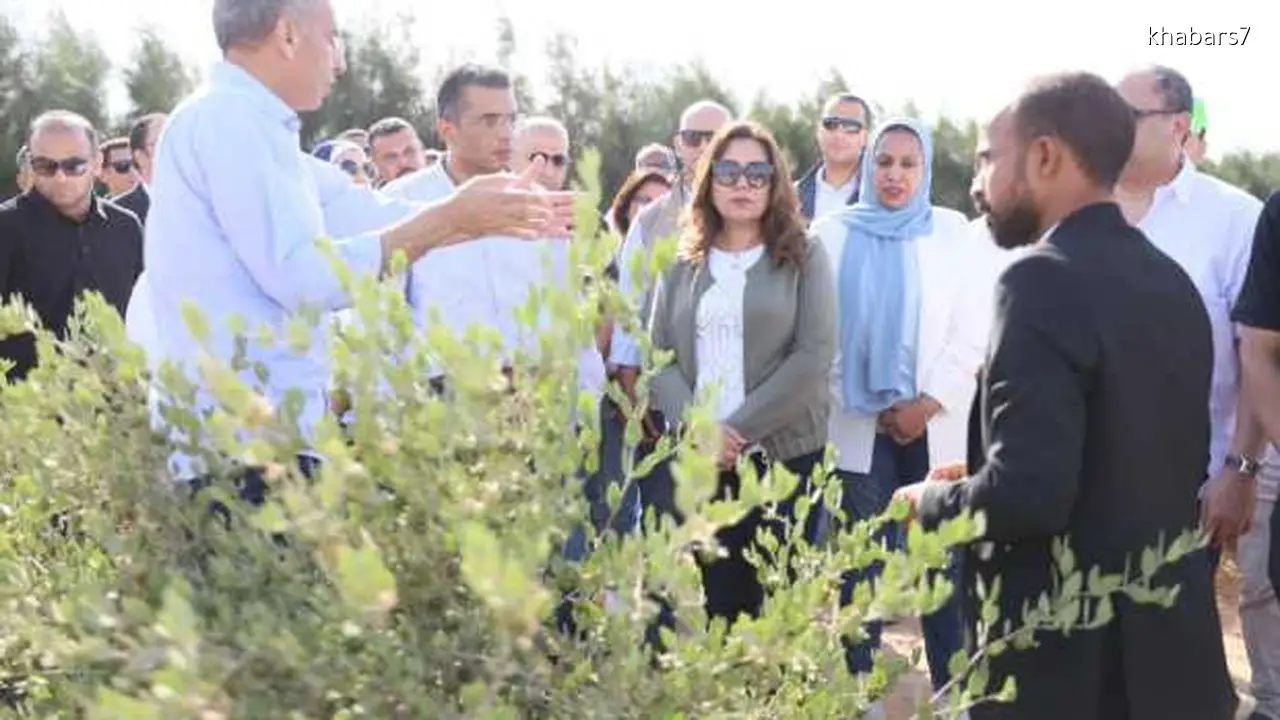
Dr. Manal Awad, Minister of Local Development and Environment, along with Dr. Walid Abdel Azim Al-Barqi, Governor of the Red Sea, and Major General Engineer Amr Abdel Moneim Mustafa, Head of the Upper Egypt Development Authority, inspected the Jojoba cultivation project in Hurghada. This visit coincided with the celebration of World Environment Day 2026 as part of the minister’s current tour of the Red Sea governorate.
Dr. Awad emphasized that the project is one of the most significant developmental and environmental initiatives undertaken by the Upper Egypt Development Authority in the Red Sea, aligning with directives from political leadership to expand green economy projects and achieve sustainable development. The initiative aims to optimize the use of natural resources to generate sustainable economic returns. She noted that this project is part of a biocircular economy strategy developed by the ministry to convert natural resources into raw materials for industry, thereby enhancing the transition to green manufacturing.
The Minister highlighted that Jojoba is a strategic crop with high economic value due to its oils being used in various pharmaceutical and cosmetic industries. She instructed the Ministry’s Waste Management Regulatory Authority to explore its potential for producing biofuels. Praising the crop’s high yield, she noted that it enhances investment and export opportunities while supporting the national economy.
During her visit, Dr. Awad reviewed the implementation rates for both phases one and two of the project and assessed ongoing work on phase three. She also examined results from planting other crops related to phase four, all aimed at bolstering state support for green projects and maximizing benefits from unconventional natural resources.
Dr. Awad received a detailed briefing on project implementation stages, confirming that phases one and two have been completed over an area of 2,000 acres with positive outcomes regarding seed quality and oil extraction rates. The third phase is currently underway following its recent groundbreaking ceremony aimed at maximizing project benefits and increasing productivity.
The project spans 3,000 acres using tertiary-treated water, serving as a comprehensive model for optimal resource utilization while supporting state plans for expanding sustainable agriculture in desert areas and boosting agricultural and industrial investment in Upper Egypt and border regions.
Moreover, Dr. Awad, along with the governor and head of Upper Egypt Development Authority, inspected irrigation networks for phase three as well as planting and harvesting processes for phases one and two. They received detailed explanations about extracting natural oils from Jojoba plants, which are among the highest valued oils globally due to their applications in vital medical and cosmetic industries.
At the end of her tour, Dr. Awad praised efforts in executing environmentally friendly developmental projects, stating that the Jojoba initiative exemplifies a pioneering approach in reusing treated water for sustainable production projects that bolster national economic interests while maximizing available resources. She stressed the importance of expanding green developmental projects as a key component in achieving Egypt’s vision for sustainable development and supporting a green economy while enhancing investment opportunities in Upper Egypt.
Dr. Walid Al-Barqi affirmed that the Jojoba project is among promising initiatives reflecting state efforts towards sustainable development by maximizing benefits from unconventional resources. He indicated that the governorate places significant emphasis on expanding such projects due to their potential for creating jobs and generating substantial economic returns.
Major General Engineer Amr Abdel Moneim Mustafa stated that Jojoba is a strategic initiative with high economic returns because of its multiple uses in pharmaceutical and cosmetic industries as well as biofuel production from natural oils. Its resilience against harsh climatic conditions further supports state efforts against desertification while achieving environmental sustainability.
The head of Upper Egypt Development Authority added that this project ranks among notable climate action initiatives under their jurisdiction, having secured second place in large project category within Egypt’s National Initiative for Smart Green Projects (COP27) in 2022 due to its environmental goals including safe use of treated water and transforming unused lands into productive investment opportunities.
He also mentioned that this initiative forms part of Upper Egypt Development Authority’s plan to implement integrated developmental projects contributing directly or indirectly to job creation for local communities while opening new avenues for investment aimed at adding economic value aligned with sustainable development goals under Egypt’s Vision 2030.
The Jojoba project in Hurghada stands out as a leading example within green projects by ensuring safe utilization of treated water while combating desertification and limiting sand encroachment alongside its role in producing clean energy—aligning perfectly with objectives outlined under Egypt’s Vision 2030 for sustainable development.
Comments