

Nile University and CCNU Sign MoU to Strengthen Academic Collaboration
Nile University welcomed a high-level academic delegation from Central China Normal University (CCNU), led by Professor Xia Lixin, President of the University’s Council. The visit aimed to explore joint cooperation opportunities and sign a Memorandum of Understanding (MoU) that establishes a strategic partnership between the two institutions in education, research, innovation, and academic exchange.
This initiative aligns with Nile University’s strategy to enhance its status as a global research university, expand its international partnerships with leading academic institutions, and support collaboration in education, research, innovation, technology, and the exchange of academic expertise.
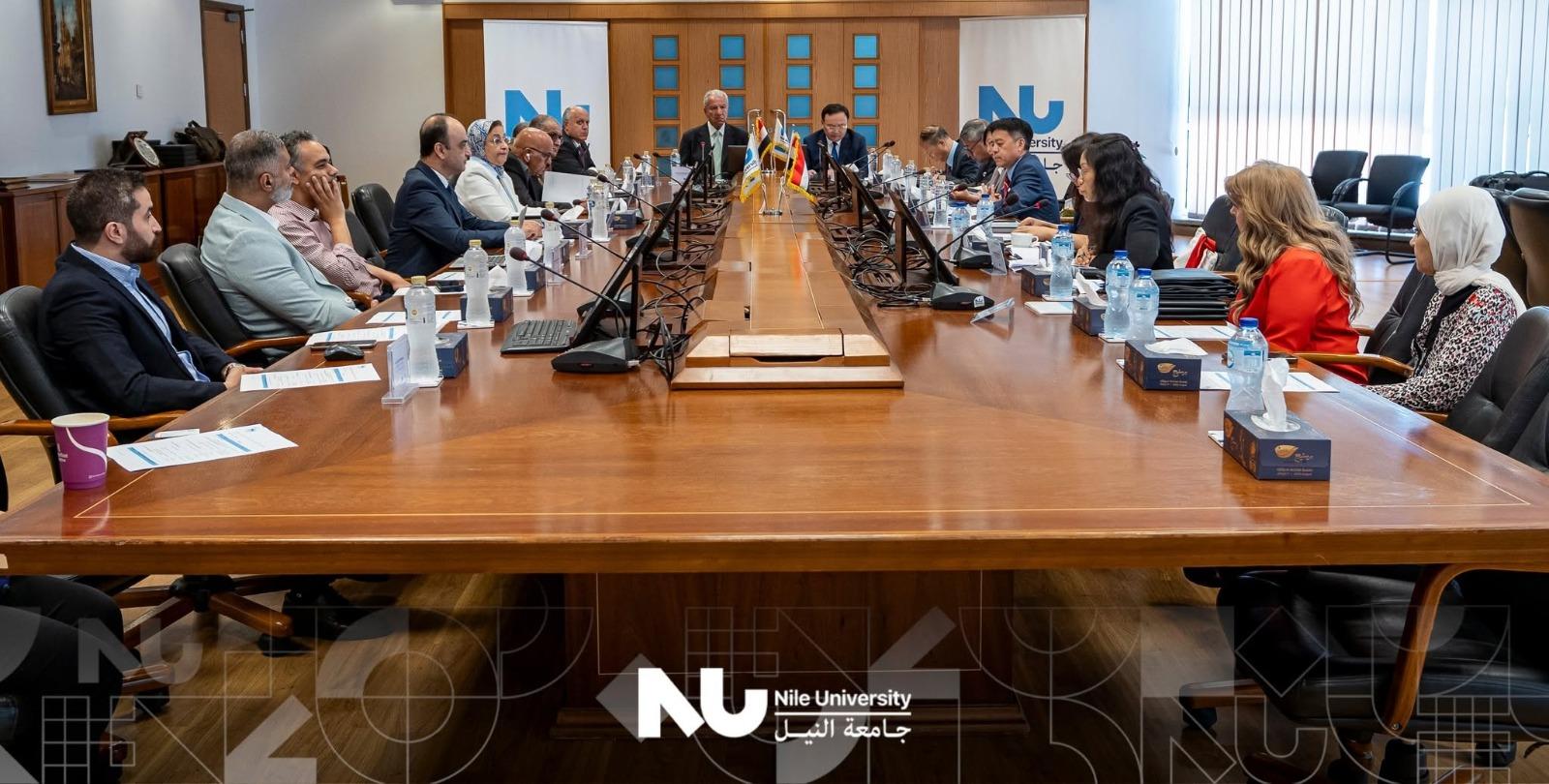
Attending the meeting were representatives from the Embassy of the People’s Republic of China in Cairo, including Education Counsellor Lu Chunqing, alongside several deans and experts responsible for international cooperation at CCNU. From Nile University, Dr. Essam Rushdi, Acting President, and Dr. Ahmed Al-Ghazouli, the incoming president, participated along with other university leaders.
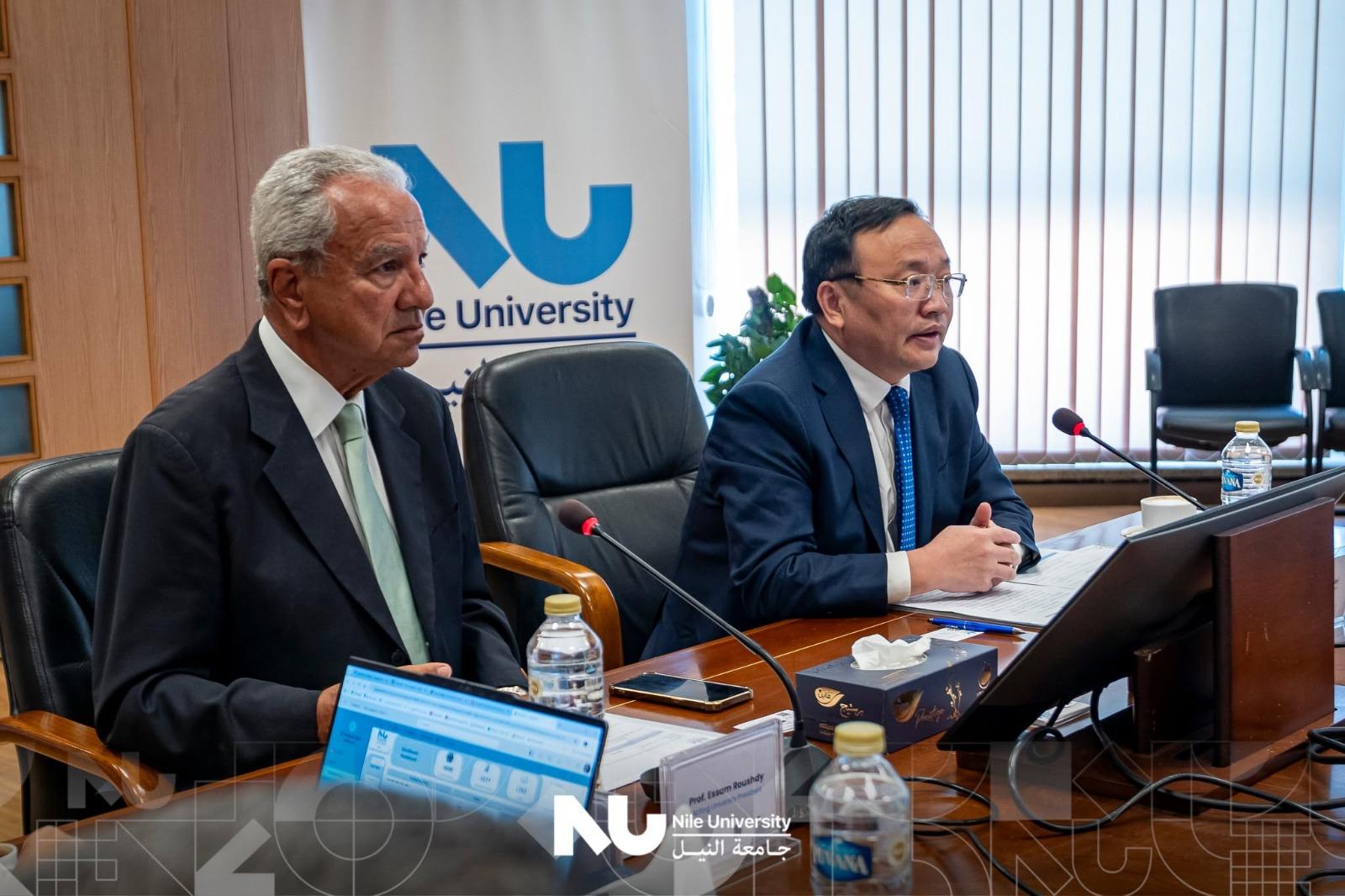
During the meeting, Nile University presented its strategic vision and priority research areas as well as its innovation and entrepreneurship initiatives developed through specialized centers. The Chinese delegation shared insights on CCNU’s capabilities and its extensive academic and research expertise.
The discussions covered potential collaboration in advanced scientific fields such as artificial intelligence in education, information technology, engineering, biotechnology, chemical sciences, educational system development, teacher training, joint research projects, and academic exchanges for students and faculty members. This cooperation aims to build sustainable knowledge bridges between the two institutions.
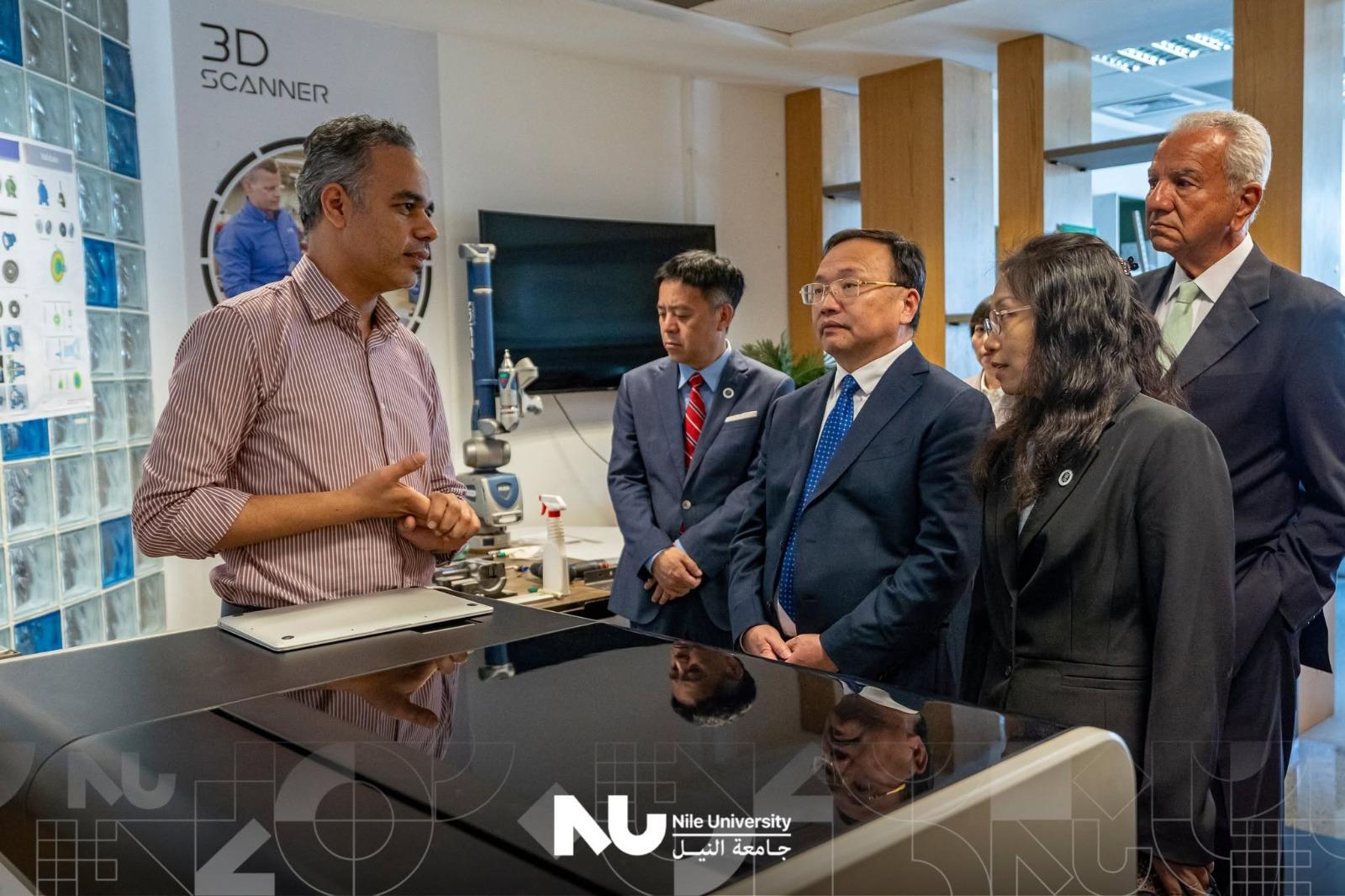


The discussions were informed by the specialties and expertise represented by members of the Chinese delegation, including the Dean of the College of Chemistry and the Dean of the College of Teacher Education.
During their tour of Nile University’s campus, the Chinese delegation visited several specialized centers including the Innovation and Entrepreneurship Center and the Industrial Training Center accredited by Festo. They learned about Nile University’s role in supporting technological innovation and entrepreneurship while linking scientific research to industrial needs and economic development.
This collaboration reflects Nile University’s commitment to expanding its international partnerships with leading global academic institutions while enhancing its position as a regional center for scientific research, innovation, and cross-border education. This aligns with its vision to build a knowledge system capable of competing globally while addressing future developmental and technological challenges.
The partnership between Nile University and CCNU also signifies an extension of growing educational and scientific relations between Egypt and China. It opens avenues for joint initiatives that will support academic excellence and research while facilitating experience exchange between both sides.
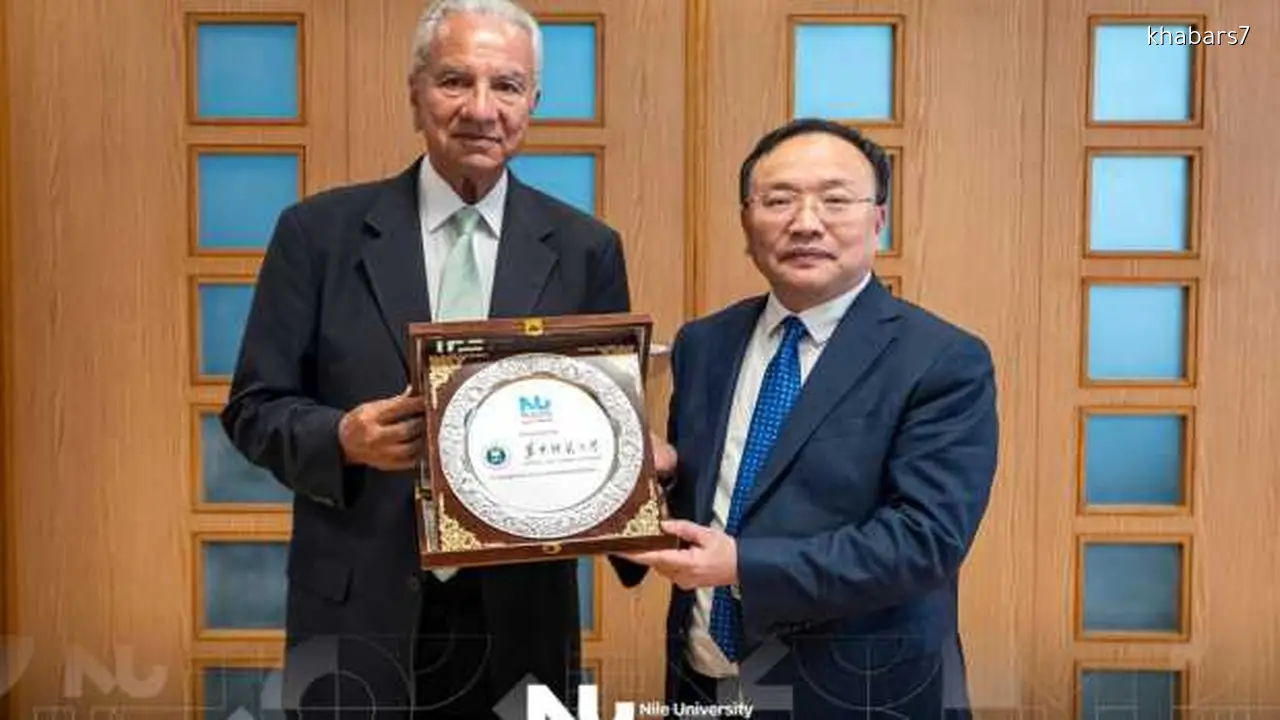
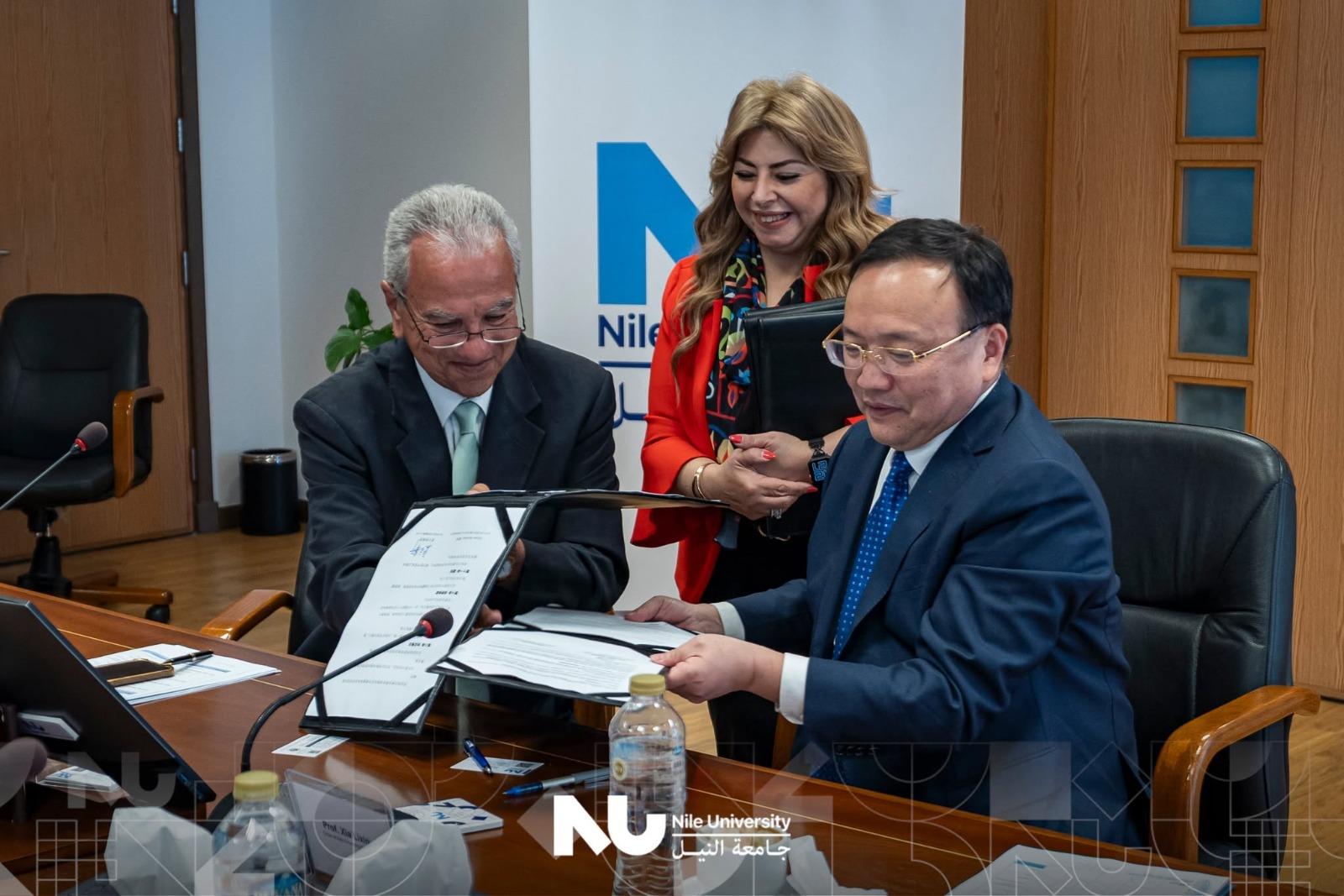
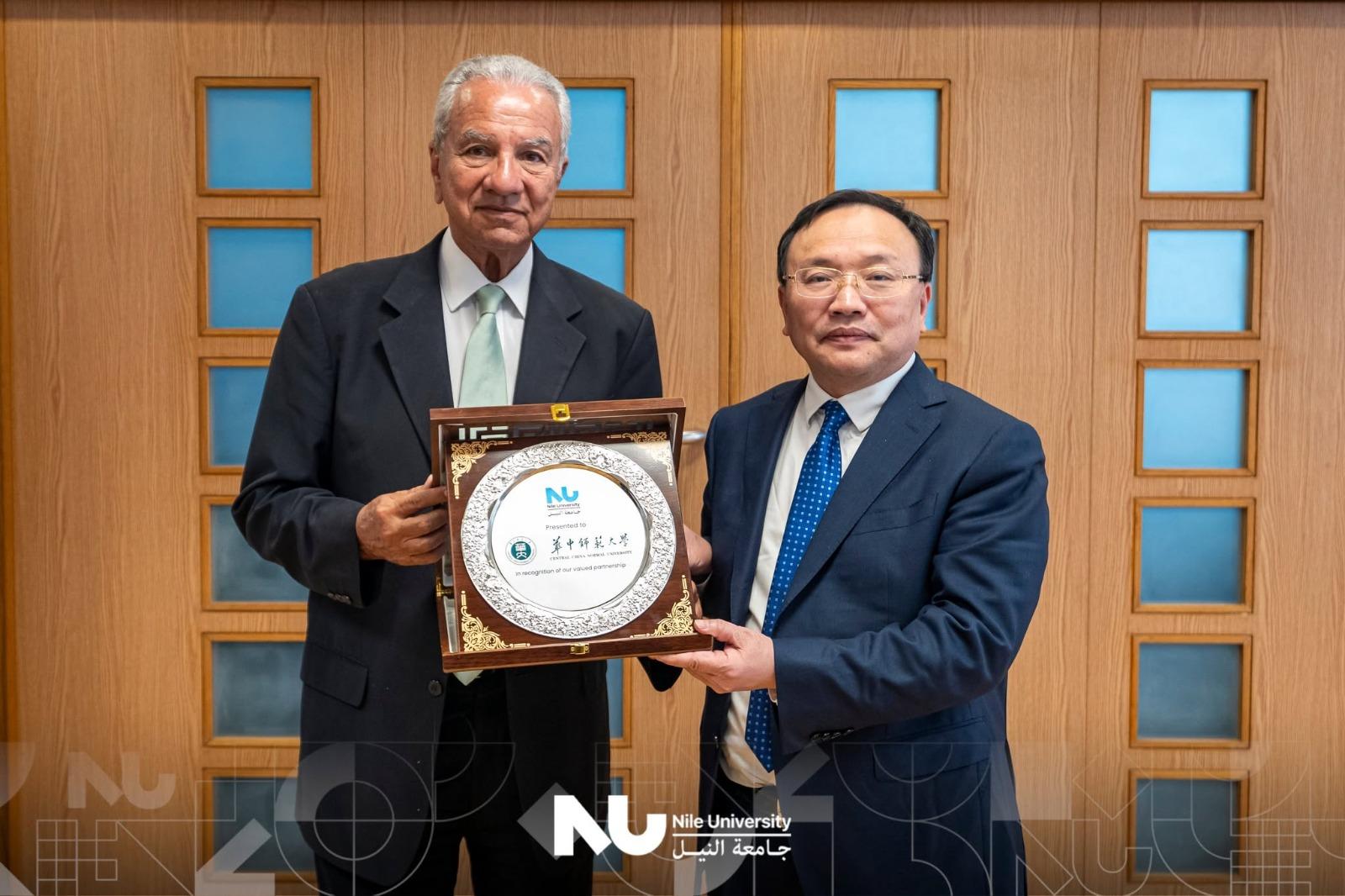
The visit concluded with an official signing of the MoU between both parties along with an exchange of commemorative shields and group photographs marking the beginning of a new phase in institutional collaboration.
Dr. Essam Rushdi emphasized that Nile University places great importance on enhancing its international partnerships with leading academic institutions worldwide to support quality education and scientific research while opening new horizons for students and researchers.
This visit represents a significant step towards building sustainable strategic cooperation with CCNU—one of the distinguished academic institutions internationally—as they look forward to developing joint programs in education, research innovation, along with exchanging academic experiences that add value to both parties.
Dr. Rushdi noted that Nile University continuously seeks to expand its network of international relations while benefiting from successful global experiences. He affirmed that collaboration with prestigious Chinese universities aligns with Nile University’s vision to become a regional hub for academic excellence in research innovation while contributing to preparing skilled professionals capable of competing globally against future challenges.
CCNU is one of China’s prestigious universities directly under the Ministry of Education. It is part of China’s “211 Project”, which focuses on developing world-class universities. Established in 1903, it has over a century-long academic history.
CCNU serves more than 31 thousand students across undergraduate and graduate programs—including around one thousand international students—and employs over 3,600 faculty members researchers. The university comprises 28 colleges/schools along with 19 postdoctoral research centers as well as 67 specialized research institutes/laboratories.
Moreover, CCNU maintains an extensive network of international relationships through partnerships for academic programs exchange collaborative research with over 200 universities worldwide. This makes their signed agreement with Nile University particularly significant as it enhances Egypt’s academic presence within one of Asia’s largest university cooperation networks.
Nile University is recognized as Egypt’s first private research university striving to establish itself as a regional center for excellence in higher education scientific research innovation entrepreneurship.
The university offers diverse colleges specializing in fields such as engineering applied sciences information technology computer science biotechnology business administration energy environmental engineering alongside comprehensive systems supporting innovation entrepreneurship technology transfer.
Nile University also focuses on building effective international partnerships that enhance its academic capabilities providing distinguished educational opportunities for its students researchers thereby fulfilling its mission to prepare generations capable of competing globally contributing towards sustainable development knowledge-based economy.
Comments