

Comprehensive Health Insurance: Building a Digital Financing Model for Swift Payments and Transparency

 Comprehensive Health Insurance" width="750" height="450" />
Comprehensive Health Insurance.
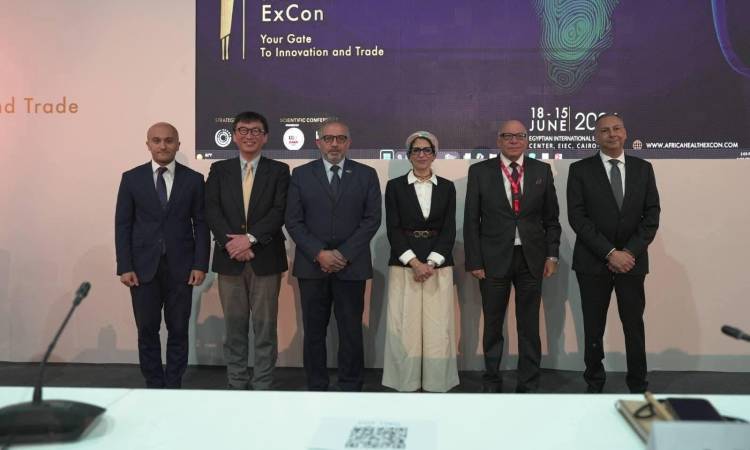
The General Authority for Comprehensive Health Insurance hosted a high-level session titled “Digital Integration between the General Authority for Comprehensive Health Insurance, Service Providers, and Claims Management Companies: Towards a Faster and Safer Model for Health Payments” during the African Medical Conference and Exhibition 2026. The session featured prominent experts and officials from local and international health financing, digital transformation, and health system policy sectors.
Key participants included Dr. Adel Adawy, former Minister of Health and President of the Egyptian Medical Association; Dr. Hala Zayed, former Minister of Health; Dr. Samah El-Saharty, health policy expert at the World Bank; Dr. Ahmed Khalifa, health economics official at the World Health Organization; Dr. Toby Makoto, health financing expert at Japan International Cooperation Agency (JICA); and Eng. Akram Reda, CEO of eHealth. The session was moderated by Hossam Sadiq, Executive Director of the General Authority for Comprehensive Health Insurance.
In his opening remarks, Hossam Sadiq emphasized that the authority is developing a comprehensive digital procurement model that embodies principles of transparency, efficiency, and speed. He noted that digital transformation is essential for enhancing integration between the authority as a strategic purchasing entity, healthcare service providers, and claims management companies. This integration aims to expedite payment cycles, improve claim quality, and reduce operational and financial risks.
Sadiq highlighted that the comprehensive health insurance system is a primary tool for Egypt to achieve universal health coverage. He pointed out that the system is currently implemented in Port Said, Luxor, Ismailia, South Sinai, Suez, and Aswan, with plans to expand in its second phase to include Minya, North Sinai, Matrouh, Damietta, and Kafr El-Sheikh.
He also mentioned that over 5.2 million citizens are now registered beneficiaries within a growing network of more than 580 contracted service providers. There has been a notable increase in private sector participation reflecting confidence in the stability of the financial system and fairness in payment mechanisms.
During the session, the authority presented an integrated digital infrastructure supporting strategic procurement systems which includes beneficiary management systems, enterprise resource planning (ERP), claims management systems with medical verification capabilities, along with portals for beneficiaries and service providers to ensure data integration and operational efficiency.
Participants discussed the importance of digital integration in enhancing health spending efficiency and improving claims management while expanding private sector involvement. They also highlighted the growing role of artificial intelligence in supporting financial governance, combating fraud, and optimizing resource utilization.
The discussions underscored that true value from digital transformation goes beyond merely digitizing processes; it lies in leveraging reliable data to guide purchasing decisions while improving healthcare quality and achieving optimal value for spending.
The session also reviewed leading international experiences in digital linkage, strategic purchasing practices, and utilizing artificial intelligence to uphold financial integrity while controlling health expenditures. Emphasis was placed on integrating technology with institutional governance to ensure sustainable health financing systems.
Sadiq reaffirmed that the authority is moving forward with clear institutional steps toward establishing a comprehensive national model for digital health financing based on transparency, accountability, and efficient resource management. He noted that they have adopted their first official policy against fraud and misuse while implementing an integrated governance plan along with internal audits.
At the conclusion of the session, participants agreed that the future of health financing relies on building interconnected digital systems capable of transforming data into more efficient decisions which enhances sustainability in universal health coverage while improving service quality provided to citizens.
The General Authority for Comprehensive Health Insurance reiterated that digital integration among funding entities, service providers, and claims management companies is fundamental to developing Egypt’s health financing system. It serves as a key driver for enhancing efficiency and sustainability while reflecting a scalable national experience across Africa.
Comments