

Sustainable Financing and Digital Transformation Key to Healthcare System Development, Says Hossam Sadiq
 Africa Health ExCon 2026" width="750" height="450" />
Africa Health ExCon 2026.
The General Authority for Comprehensive Health Insurance concluded its participation in the fifth edition of the Africa Health ExCon 2026, held under the patronage of President Abdel Fattah El-Sisi from June 15 to 18, 2026, at the Egypt International Exhibition Center in Cairo. The event attracted a wide range of healthcare institutions, government entities, experts, and decision-makers from around the world, serving as a significant platform for dialogue and experience exchange in healthcare investment and medical innovation.
Hossam Sadiq, the Executive Director of the Authority, participated in several high-level discussions focused on the future of healthcare financing, sustainability of medical supply chains, and boosting investment in the healthcare sector. He joined esteemed experts and decision-makers from Egypt and various African nations.
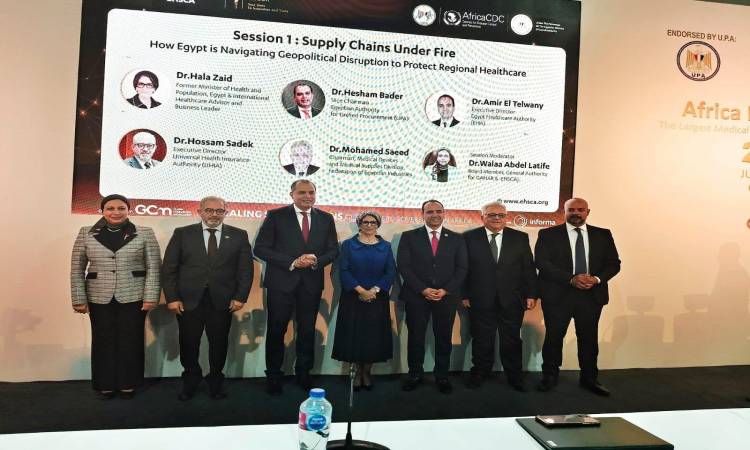
During a panel titled “Supply Chains Facing Challenges: How Egypt Handles Geopolitical Disruptions to Safeguard Regional Healthcare,” Sadiq presented the vision of the Comprehensive Health Insurance System in enhancing health systems’ resilience against global challenges. He emphasized that sustainable financing is crucial for ensuring continuous healthcare services and maintaining system efficiency under various circumstances.
Sadiq explained that the Comprehensive Health Insurance System is based on sustainable financial principles that ensure timely payments to healthcare providers and availability of essential medications and services, even during crises or economic pressures. He highlighted the importance of diversifying funding sources, broadening the contributor base, and enhancing risk management systems alongside actuarial analysis to support long-term financial stability.
He also noted that strategic purchasing of health services is vital for improving healthcare quality and maximizing resource utilization by directing spending towards health priorities. This approach encourages quality and efficiency among service providers while linking funding to performance indicators and health outcomes to deliver optimal value for citizens.
According to Sadiq, balancing expansion in universal health coverage with financial sustainability requires evidence-based policies that enhance resource efficiency while expanding insurance protection. This ensures that the system can meet its commitments to beneficiaries while maintaining service quality.
While participating in the second African Summit on Healthcare Investment, Sadiq discussed how the Comprehensive Health Insurance System enhances the attractiveness of the healthcare sector for investment. He asserted that this system not only aims for universal health coverage but also represents a comprehensive model for reorganizing the healthcare market to create a more stable and sustainable environment for service providers and investors.
The system has helped expand beneficiary bases, regulate demand for healthcare services, stabilize financial flows to providers, promote governance principles and transparency, and develop contracting mechanisms alongside strategic purchasing to enhance investor confidence and facilitate growth in health investments.
Sadiq emphasized that digital transformation is a key driver for developing a sustainable healthcare system. He outlined efforts by the authority to enhance digital infrastructure and launch technological solutions supporting management and financing of health services, which contribute to operational efficiency, transparency enhancement, and data-driven decision-making.
He stressed that effective partnerships between public and private sectors are essential for achieving universal health coverage goals. The Comprehensive Health Insurance System provides a clear framework for contracting and financing that allows private sector participation in delivering high-quality accredited health services.
Sadiq indicated that upcoming phases will see continued gradual expansion of the Comprehensive Health Insurance System, starting with preparations for implementation in Minya Governorate—marking a significant step towards universal health coverage while enhancing opportunities for health investment and improving service quality for citizens.
In conclusion, Hossam Sadiq reiterated that building a sustainable healthcare system capable of meeting future challenges requires integrated efforts from all partners along with reliance on sustainable financing, strategic purchasing, digital transformation, and enhanced collaboration with the private sector. This ensures high-quality health services are provided while achieving financial protection for citizens under the Comprehensive Health Insurance System.
The participation of the General Authority for Comprehensive Health Insurance in this year’s Africa Health ExCon underscores its pivotal role in supporting efforts to develop Egypt’s healthcare sector while promoting regional and African cooperation to exchange experiences aimed at building more efficient and sustainable health systems—contributing towards achieving universal health coverage goals and sustainable health development.
Comments