

Health Minister Highlights Vaccine City as a Vision for Sustainable Health Security
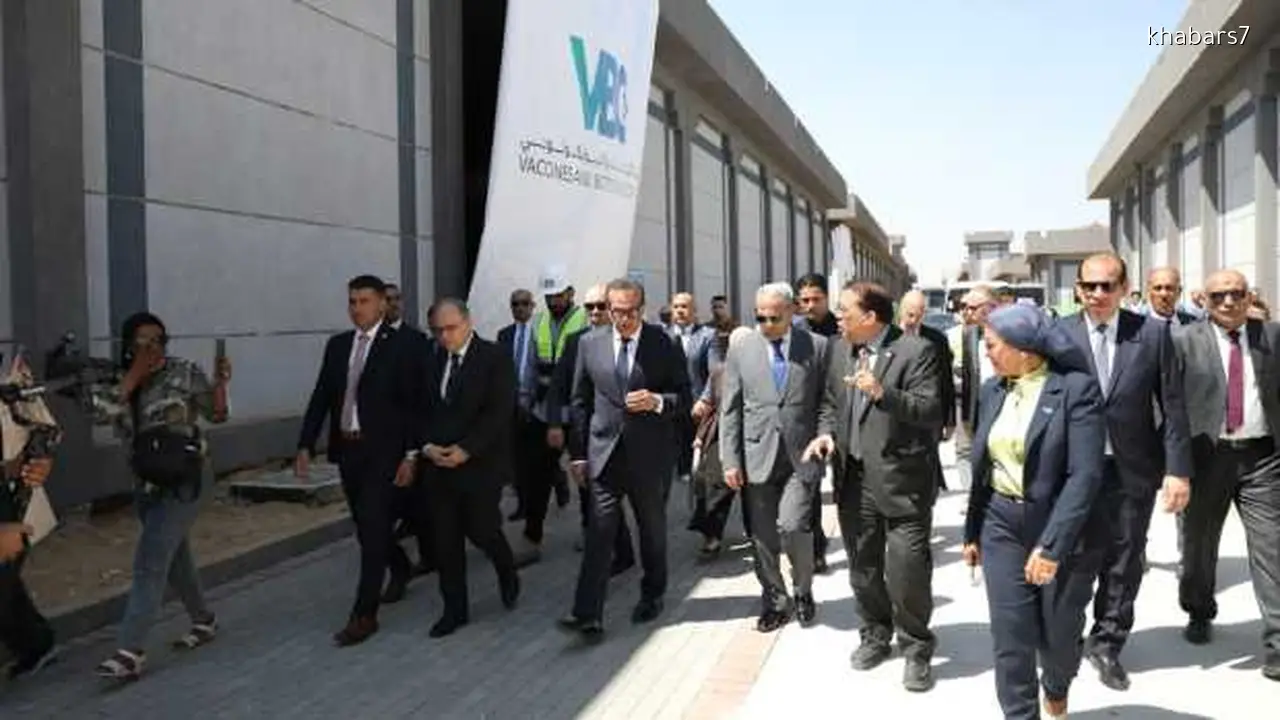
Health Minister during the meeting.
Dr. Khaled Abdel Ghaffar, Egypt’s Minister of Health and Population, expressed his appreciation for the Vaccine and Biotechnology City, describing it as a successful model of investment partnership between the government and both foreign partners and local investors, with investments expected to reach 12 billion Egyptian pounds by 2030.
This statement came during the minister’s visit to the city, attended by Major General Nabil Hasballah, Governor of Ismailia, Dr. Ali Al-Ghamrawy, Head of the Egyptian Drug Authority, Dr. Amr Qandil, Deputy Minister, Major General Magdy Anwar, Director of the National Service Projects Authority, and Dr. Magdy El-Sayed, CEO of the city.
During a press conference held on the sidelines of the visit, the minister emphasized that the Vaccine City embodies the political leadership’s vision for achieving sustainable health security and localizing biotechnology industries. He noted that this project is a “national security imperative” and serves as a launchpad for establishing Egypt as a leading regional center in Africa and the Middle East.
He added that the city aims to employ 1,500 trained national workers and specialists while enhancing their skills through the VBC Academy focused on capacity building in line with Egypt’s 2030 vision for human development. The city is also equipped with an integrated cooling chain and advanced storage systems that meet global standards, ensuring a sustainable strategic stockpile while enhancing the country’s readiness to face epidemics and health emergencies.
Dr. Khaled Abdel Ghaffar further explained that the city implements a “One Health” model by combining human and veterinary vaccine production in one location to combat zoonotic diseases while committing to environmental sustainability through reliance on solar and clean energy sources. He pointed out that achieving self-sufficiency would reduce import costs and conserve foreign currency.
In his remarks, Major General Nabil Hasballah highlighted that hosting this monumental national project reflects exceptional Egyptian achievement driven by national willpower and cooperation among state agencies to ensure pharmaceutical national security. He emphasized that the city is not merely an advanced factory but also serves as a technological and research base positioning Egypt at the forefront of the region while showcasing successful investment partnerships and an attractive investment environment in Ismailia.
The governor noted that the city represents unique integration by unifying human and veterinary vaccine production, practically applying the One Health principle to protect humans, animals, and the environment simultaneously.
Dr. Magdy El-Sayed presented updates on work progress, achievement rates, development plans, and future expansion strategies while stressing the importance of coordination among relevant entities to meet strategic objectives according to global standards.
The visit included an inspection of training activities at the city’s academy, central vaccine filling operations, three production lines with an annual capacity of 140 million doses, as well as central facilities buildings, energy stations, water treatment facilities, and specialized cooling rooms covering an area of 9,000 square meters in accordance with top international quality standards.
Comments