

Transport Minister Inspects Work Sites for Second Line of Electric Train Between Aswan and Luxor
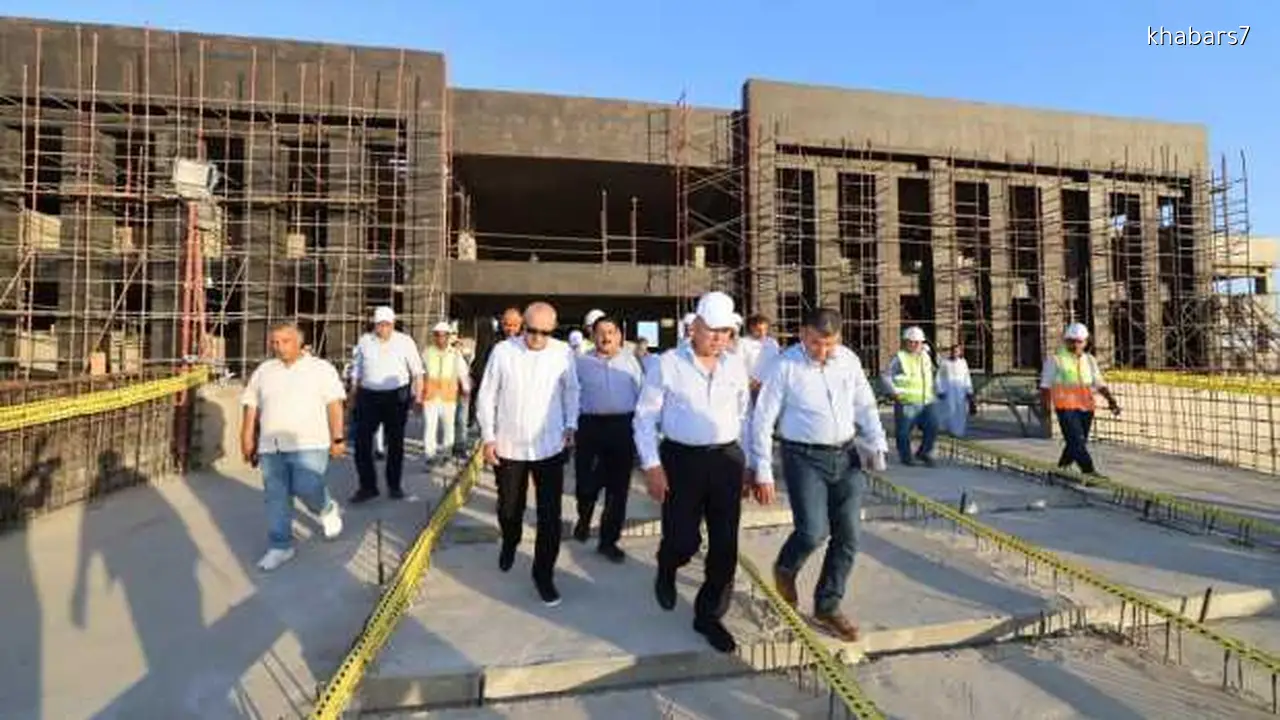
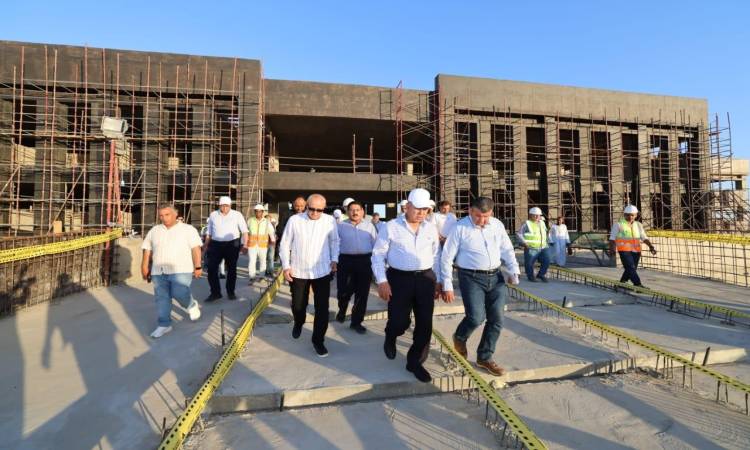
Engineer Kamel El Wazir, Egypt’s Minister of Transport, conducted an inspection tour of work sites for the second line of the electric train network (October/Aswan/Abu Simbel) during his extensive visit to Aswan and Luxor. The inspection aimed to review several developmental and service projects being implemented by the ministry.
This visit aligns with President Abdel Fattah El-Sisi’s directives for continuous monitoring of the electric train network project.
Accompanying the minister were Amr Lasheen, Governor of Aswan, and Abdel Mottaleb Ammara, Governor of Luxor. They inspected work sites along the second line, which spans 1,100 kilometers from Aswan station to Luxor station over a distance of 210 kilometers.
The tour included visits to nine stations along this route, comprising three high-speed train stations and six regional train stations, out of a total of 36 stations that make up the second line of the electric train network. This includes 13 high-speed stations and 23 regional stations.
The minister inspected high-speed stations such as Aswan Airport Station, strategically located two kilometers from the alternative dam axis in Aswan. This station serves Aswan city, Aswan International Airport, and Aswan University. Other notable stops included Edfu Station at the intersection with the western desert road and Luxor Station, which is close to Samir Farag Axis and Luxor Airport. This station supports urban expansions in the new city of Luxor (New Thebes) while enhancing tourism in the area and serving local industrial zones.
Additionally, he checked regional train stations including New Aswan Station, which serves urban expansions in New Aswan located about seven kilometers away. It also supports energy companies and attracts investment opportunities while benefiting the industrial area in New Aswan. Kalabsha Station was noted for its location in front of Kalabsha Axis serving Kalabsha city and projects under Future Egypt initiatives.
The inspection also covered Al-Sab’iya Station at the entrance to Al-Sab’iya city serving phosphate mines, Dra’ Station serving Dra’ city about 20 kilometers away, as well as Benban Solar Power Station. Esna Station is located at Esna city’s entrance about 12 kilometers from it, while Arment Station caters to Arment city and surrounding agricultural areas.
The minister monitored progress rates in station construction and adherence to timelines for project completion. He also reviewed passenger flow plans from main entrances to ticket halls and platform transitions while examining each station’s investment plan.
He emphasized the need for round-the-clock work to ensure all tasks are completed to high-quality standards. He pointed out that station locations are strategically close to roads and residential areas while ensuring free access routes cater to various traffic directions.
The project includes designated parking areas at various stations to connect them with surrounding cities and villages for easier access by travelers from different directions.
The minister also reviewed construction works on routes and infrastructure undertaken by national companies, insisting on top-quality execution given the significance of this line as part of the logistics development corridor (Alexandria/Cairo/Aswan/Toshka).
He highlighted that this corridor aims to create a development passage west of the western desert road linking agricultural production areas in Toshka, West Aswan, and West Minya with consumption regions in Cairo and export zones in Alexandria while connecting tourist spots from Abu Simbel through Aswan, Luxor, Abydos up to Cairo’s pyramids.
The minister noted that this second line will connect raw material production areas in Abu Tartour, Qena, and Aswan with export ports while reducing environmental pollution caused by diesel locomotives.
He added that the three lines of the electric train network will provide thousands of direct and indirect job opportunities while significantly reducing travel times between governorates by more than half compared to current travel durations via old rail networks or existing roads linking governorates.
El Wazir affirmed that this second line will yield numerous economic benefits for Egypt by connecting logistics zones in Farshout, Nag Hammadi, Qena, Toshka along with servicing new cities such as Beni Suef New City, Faiyum New City, Fashn New City, Minya New City, Mallawi New City, Assiut New City among others.
He added that it will enhance connectivity with remote governorates through Farshout Station exchanging services with Abu Tartour Railway Line while linking tourist areas across Luxor, Aswan Abu Simbel resorts along with lands designated for tourism development by the Tourism Development Authority in Hurghada.
Furthermore, he noted that this second line interconnects with the first line at October Gardens Station and with the third line at Qena Station.
The electric train network comprises three lines totaling approximately 2,000 kilometers long featuring 60 stations alongside two main workshops and five maintenance points. The fleet consists of 41 high-speed trains alongside 94 regional trains plus 41 freight locomotives. The length of the second line (October/Aswan/Abu Simbel) is 1,100 kilometers inclusive of 36 stations one control center one main overhaul workshop along with three maintenance storage points located in Aswan Abu Simbel as well as Safaga.
Comments