

Transport Minister: Western Desert Road is Part of Cairo-Cape Town Corridor
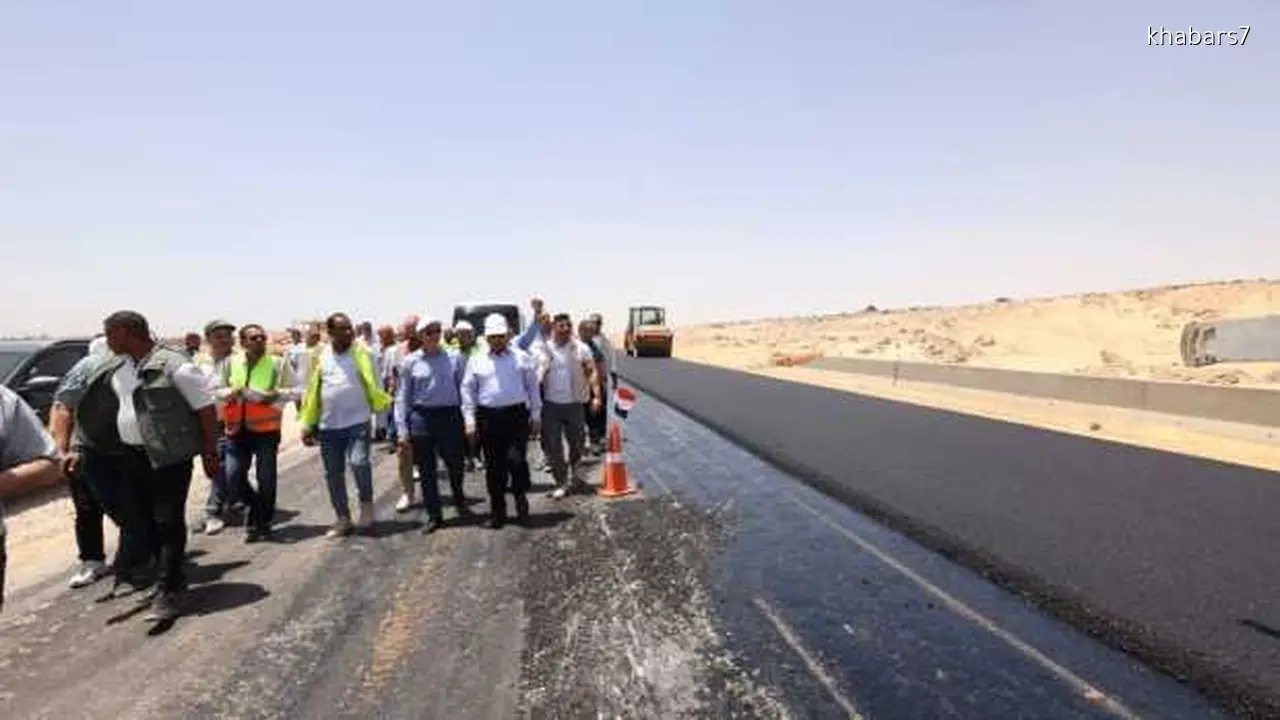
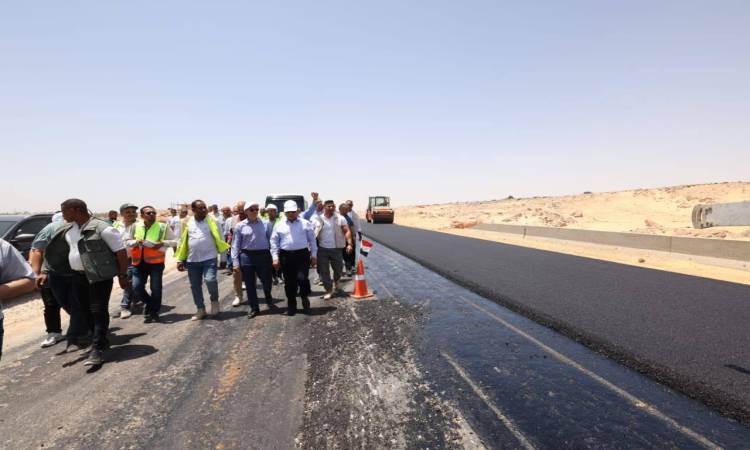
Minister of Transport’s Tour.
The Minister of Transport, Eng. Kamel El-Wazir, continued his inspection tours across various governorates to oversee the implementation of several developmental and service projects by the Ministry of Transport aimed at benefiting citizens. Today, he visited Aswan, accompanied by Aswan Governor Eng. Amr Lashin, Major General Mohamed Hassan, head of the General Authority for Roads and Bridges, and his deputy Dr. Abdel Rahman Al-Baz, along with leaders from executing companies to review road and bridge projects in the Aswan and Luxor governorates.
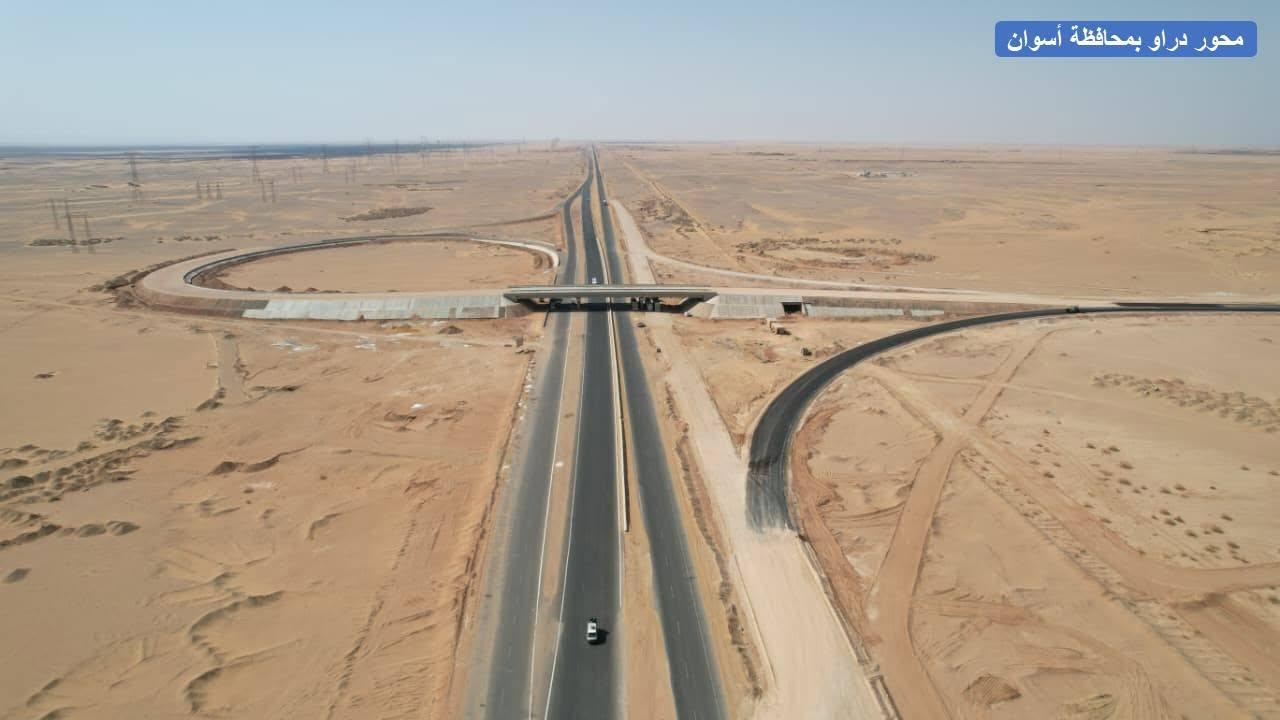
During his visit, the minister monitored the progress of the “Draou” Nile axis project, which spans 18 kilometers with two lanes in each direction and a width of 21 meters. The project includes nine structures comprising seven bridges and two tunnels.
He instructed the leadership of the Roads and Bridges Authority to intensify work around the clock to expedite completion, emphasizing the importance of this axis in connecting the eastern agricultural road (Cairo – Aswan) to the western desert road (Cairo – Aswan) across the Nile River and linking it to the western agricultural road south of Draou city in Aswan. This axis will also contribute to connecting development areas west of the Nile with both western and eastern desert roads, as well as facilitating access to quarry areas along the “Balanah – Kalabsha” route and supporting solar energy projects in Benban. It will also serve agricultural projects covering 850 thousand acres and areas for farming west of Kom Ombo, alongside enhancing tourism regions.
Furthermore, during his inspection tour at Draou axis, El-Wazir announced a reward for engineers and workers involved in this significant project in recognition of their efforts towards completing this monumental work. He stated that Draou axis represents an important addition to the network of Nile axes and significantly contributes to improving transportation flow and supporting comprehensive development.
He pointed out that prior to 2014, only 38 axes and bridges had been constructed. In response to directives from President Abdel Fattah El-Sisi in 2014 to reduce distances between axes to 25 kilometers for better mobility within urban communities, a comprehensive development plan was initiated across various state sectors (industrial, agricultural, tourism, urban development, commercial) aimed at reducing accident rates, cutting travel times, and conserving fuel consumption. The goal is for these axes to serve as integrated crossways linking road networks on both sides of the Nile rather than merely serving as bridges over it.
The ministry has planned for 35 integrated cross axes in total, raising the overall number to 73 axes—including 22 specifically in Upper Egypt—of which 19 have already been completed: 14 in Upper Egypt and five in the Delta region. Currently, seven more Nile axes are under construction: three in Upper Egypt and four in Delta.
Additionally, El-Wazir reviewed several road projects within both governorates including enhancements on a connection road leading to Aswan Airport stretching 7.8 kilometers with three lanes each way utilizing modern paving techniques. He also examined ongoing work on a connection between the western agricultural road and western desert road between Luxor and Aswan; this link is being widened from six meters to twelve meters while ensuring high-quality standards suitable for heavy transport vehicles.
The minister further inspected progress on upgrading the western desert highway extending over 1,226 kilometers—specifically reviewing dualization efforts on segments from Luxor/Al-Sabaaia (55.8 km) with three lanes each way at a width of 13.9 meters and from Aswan/Toshka (215 km), where dualization is currently underway over a distance of 50 km.
The sections completed include stretches from Cairo to Minya (230 km), Minya to Qusiah (60 km), with enhancements expanding that stretch into six lanes toward Assiut (three main lanes plus three truck lanes). Work has also been finalized from Al-Sabaaia to Edfu (25 km) and Edfu to Aswan (87.5 km) scheduled for completion by March 2025. Progress continues on segments from Qusiah to Assiut (57 km), with plans set for further developments totaling an overall enhancement length of 402 km already completed while work continues on an additional 385 km with plans for another 439 km.
El-Wazir emphasized adherence to all execution works per standard specifications while ensuring traffic safety measures are prioritized without transferring traffic onto service roads until full completion according to quality standards—aiming at enhancing safety factors along these routes.
He also stressed removing any encroachments alongside roads according to legal distances particularly given that this route forms part of the Cairo-Cape Town corridor which will facilitate trade movement between Egypt and African countries. He noted that all stages are being executed by specialized national companies within a framework emphasizing partnerships with private sector entities across all transport ministry projects aimed at serving Egyptian citizens while contributing towards comprehensive development plans; highlighting that road projects—especially those in Upper Egypt—are clear examples reflecting significant advancements within Egypt’s infrastructure sector.
Comments