

Higher Education Minister: Building a Knowledge Economy Requires Strong Educational System
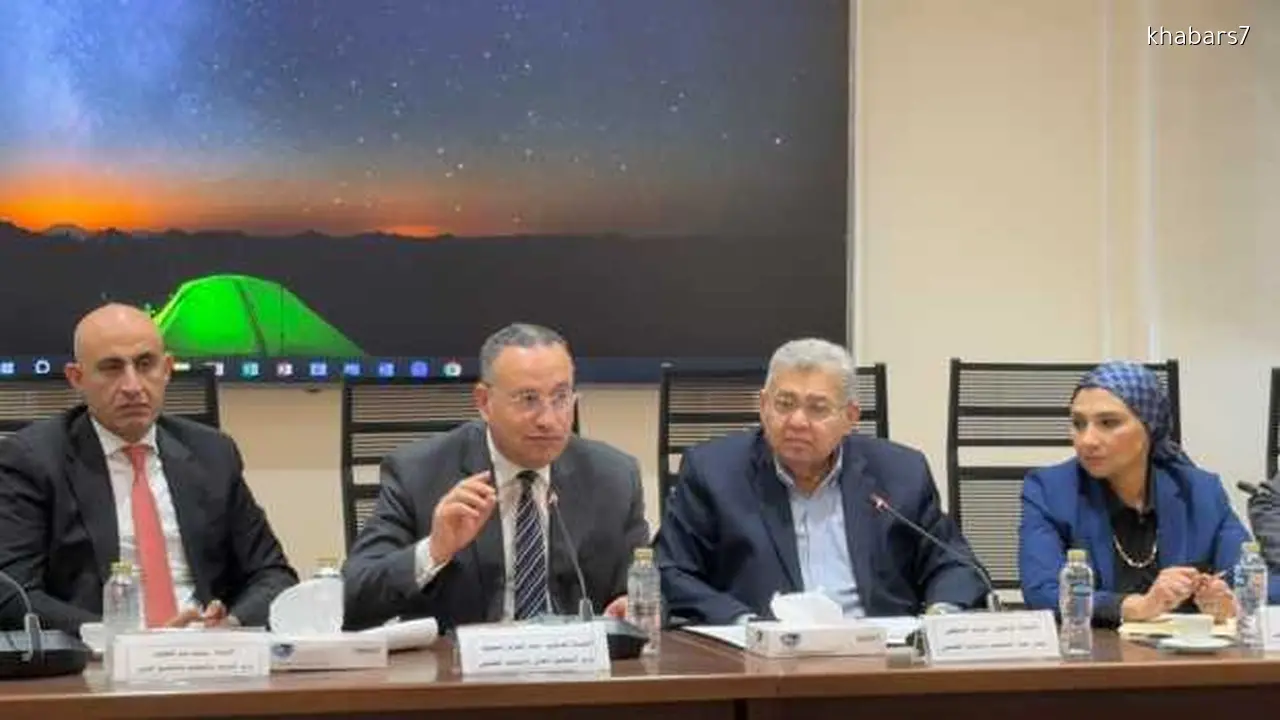
Dr. Abdelaziz Konswa, Egypt’s Minister of Higher Education and Scientific Research, participated in a comprehensive meeting held by the Education and Scientific Research Committee of the House of Representatives. The session was chaired by Dr. Ashraf El-Shehhi, with the presence of Mohamed Abdel-Latif, Minister of Education and Technical Education, and committee deputies Dr. Magda Bakri and Lotfy Shehata. Various leaders from the Ministry of Higher Education were also in attendance, including Dr. Mostafa Refaat, Secretary General of the Supreme Council of Universities, Dr. Maher Msbah, Secretary General of Private and National Universities Council, Dr. Ahmed El-Giushi, Acting Head of the Education Sector and Secretary General of the Councils for Institutes and Technical Education, and Dr. Ghada Abdel-Bari, Secretary General for Foreign Universities Affairs.
The focus of the meeting was on ways to enhance technical education systems, expand technological education, and strengthen collaboration between ministries to align educational outputs with labor market needs and sustainable development plans.
Dr. Konswa emphasized that building a knowledge economy necessitates developing an educational system capable of preparing qualified personnel to support various productive sectors. He noted that the industrial sector is one of the fastest-growing contributors to the national economy due to its job creation potential and its ability to produce goods targeting foreign markets. He highlighted that investment in human resource development is critical for this vital sector.
The minister stressed the need for integrated educational pathways that align with industry requirements to address challenges within the industrial community that demands skilled technicians for production. He confirmed that restructuring technological education aims to provide essential human resources needed for economic growth and sustainable development.
Dr. Konswa pointed out that advancements in technological education should consider Egyptian society’s characteristics, customs, and culture by providing flexible educational pathways that allow students to continue their studies and obtain bachelor’s degrees. This approach aims to enhance the attractiveness of this type of education and gradually change societal perceptions so that individual value is linked to actual skills, capabilities, and achievements.
He reviewed the historical evolution of technological education systems which began with the establishment of technical institutes in the 1960s to support industrial advancement by supplying necessary skilled labor. However, he noted that deviation from this objective in subsequent decades created a gap between education and development needs—an issue currently being addressed through a modernized approach to technological education.
The minister stated that Egypt currently boasts a growing network of technological universities while continuing to expand new institutions based on precise scientific studies and specific developmental needs. He highlighted that the ministry’s strategy focuses on internationalizing technological education through expanding international partnerships, joint degree programs, dual degree offerings, and fostering ties between Egyptian technological universities and their global counterparts.
In linking education with labor market needs, he mentioned efforts to develop and restructure the Strategic Planning Center for Labor Market Indicators into a comprehensive platform cooperating with various governmental and private entities to monitor labor market demands continuously while assessing educational program impacts—this supports decision-making processes aligned with actual national economic requirements.
The minister also discussed initiatives aimed at enhancing collaboration between academia and industry sectors, notably through activating the “Professor for Every Factory” initiative which allows faculty members and researchers to spend time working within industrial establishments implementing practical projects while transferring scientific expertise into production sites—this helps bolster national industry while narrowing gaps between academic knowledge and practical application.
Dr. Konswa reiterated the importance of ongoing curriculum development for academic and technological programs. He clarified that each university comprises specialized committees tasked with regularly reviewing and updating academic programs in line with scientific advancements—this enhances connections between education and industry while emphasizing investment in human capital as fundamental for achieving sustainable development goals.
During the meeting, Dr. Mostafa Refaat presented a reference framework for higher education in Egypt underscoring “Labor Market Observatory”‘s role in identifying future job needs amid rapid global changes driven by artificial intelligence advancements.
He explained that educational development requires reinforcing integration between academic paths and technical tracks while preparing graduates capable of lifelong learning who can adapt their skills post-graduation amidst evolving labor market conditions. The discussion also highlighted industrial advisory councils’ roles in shaping curricula aligned with production sector needs as well as designing courses according to sustainable development objectives—further supporting cooperation between academic institutions and industry sectors while expanding interdisciplinary specialties offering greater flexibility for students’ educational paths.
Meanwhile, Dr. Ahmed El-Giushi provided insights into current conditions within technological universities along with their future objectives explaining how curriculum philosophy merges knowledge with practical skills ensuring educational outcomes meet labor market demands thereby preventing gaps between theoretical content and real-world applications.
He noted that technological education seeks balance between theoretical understanding alongside skill acquisition aiming towards establishing one technological university per governorate by 2030 while mentioning an enrollment figure nearing 48 thousand students where approximately 70% are technical school graduates versus 30% from general secondary schools—with male students comprising around 67% compared to females at 33%. He also outlined key challenges facing technological universities alongside plans addressing them moving forward.
The participants emphasized continuous coordination between ministries responsible for higher education alongside technical education aimed at enhancing technical systems contributing towards preparing qualified human resources capable supporting national economic growth improving Egypt’s competitiveness regionally globally.
At conclusion point within meeting Dr.Konswa addressed queries raised by members from House representatives clarifying various aspects concerning strategies aimed at enhancing technological learning correlating outputs needed against labor demands reaffirming ministry’s commitment collaborating closely together leveraging insights proposals supporting advancement higher educational research frameworks.
Comments