

Minister Sherif Fathy Advocates for Enhanced Transportation to Boost Tourism Sector Resilience
 Sherif Fathy" width="750" height="450" />
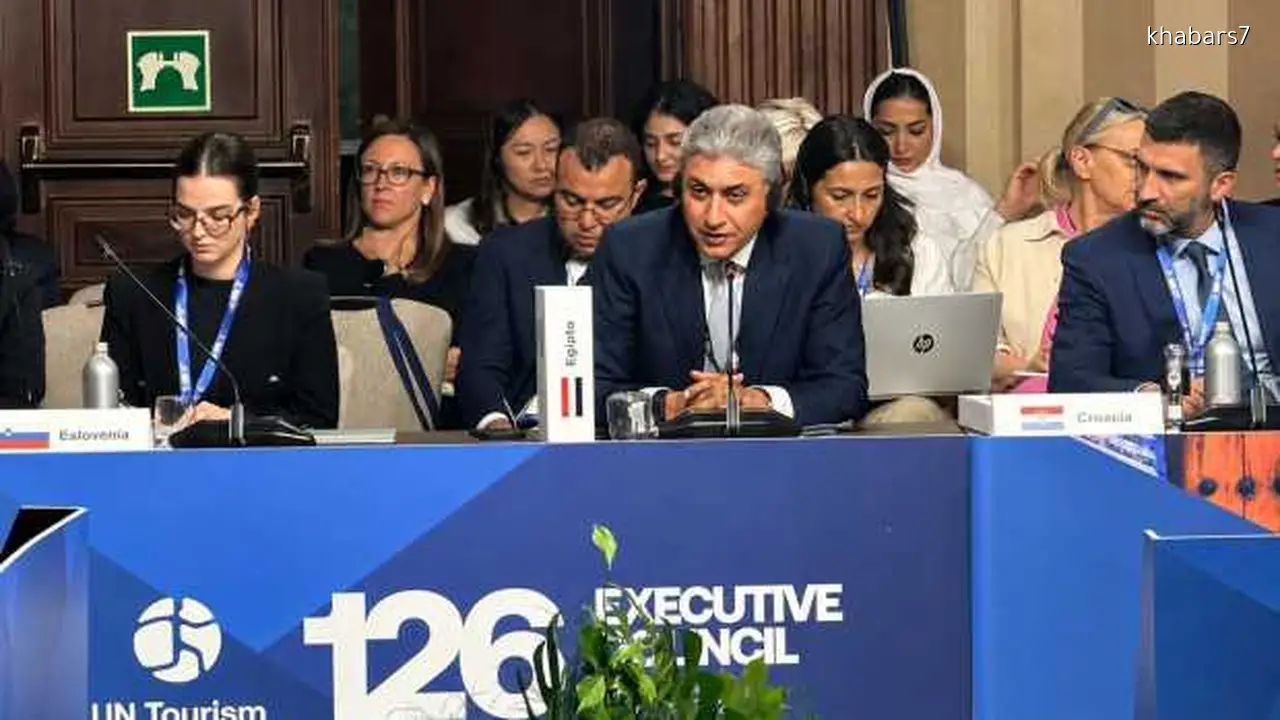
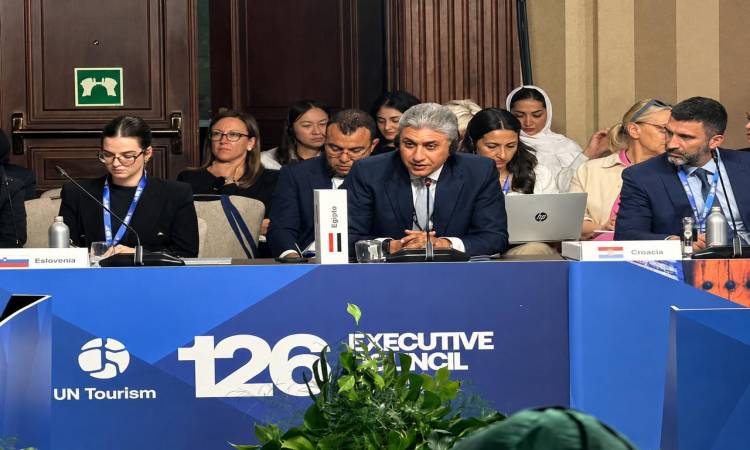
Minister of Tourism Sherif Fathy.
Minister of Tourism and Antiquities, Sherif Fathy, participated in the 126th session of the Executive Council of the United Nations World Tourism Organization (UNWTO) held in Toledo, Spain, on June 10 and 11. He was accompanied by a delegation including Rana Gouhar, the minister’s advisor for communication and external relations, Ahmed Nabil, assistant minister for monitoring and aviation affairs, and Ali Montaser, second secretary at the Egyptian embassy in Madrid.
Fathy emphasized the significance of Egypt’s participation in this session, particularly following Egypt’s election to the Executive Council for the term from 2025 to 2029. This reflects Egypt’s prominent role in supporting tourism development efforts at both regional and international levels.
During his remarks at the session, he expressed gratitude to Spain for hosting the meeting and praised UNWTO Secretary-General Sheikha Al-Anoos’ presentation of a realistic strategy that aligns with current challenges facing the global tourism industry. He reaffirmed Egypt’s commitment to collaborating with the organization to implement this strategy and achieve its objectives.
Addressing the need for enhancing tourism sector resilience amid ongoing challenges in the Middle East, Fathy stressed global cooperation to support various modes of passenger transport. He noted that efficient and affordable transportation is crucial for sustaining global tourism movement, which serves as a backbone connecting tourist destinations with source markets through air, sea, or land transport.
The minister underscored the importance of maintaining efficient transportation networks across all forms while ensuring their continuity during geopolitical crises and accelerating recovery within the global tourism sector.
In closing his remarks, Fathy reiterated Egypt’s full support for UNWTO initiatives aimed at developing the tourism sector and enhancing its contribution to economic growth and sustainable development worldwide.
The meeting also announced the opening of UNWTO’s new headquarters in Madrid on June 29. A commemorative photo was taken with heads of delegations participating in this session.
Additionally, host countries were approved for upcoming sessions of the Executive Council: sessions 127, 128, and 129.
The discussions covered various priority topics related to global tourism such as sustainable tourism development. The role of tourism as a driver of economic growth and job creation was emphasized alongside strategies to address challenges linked to geopolitical tensions, economic fluctuations, and climate change.
Furthermore, discussions highlighted the importance of supporting innovation and digital transformation within tourism through artificial intelligence applications while enhancing climate action efforts and investing in capacity building.
In terms of peacebuilding through tourism, council members discussed a proposal from Colombia to establish a joint task force aimed at promoting tourism’s role in peacebuilding and reintegrating communities affected by conflicts. The focus would be on documenting peace tourism experiences while involving women, youth, indigenous people, and conflict-affected individuals in tourism initiatives.
The outcomes from “The Riyadh Declaration on the Future of Tourism,” adopted during the 26th General Assembly regarding responsible AI use in tourism were reviewed. Plans include organizing a high-level conference on AI and tourism in Kuwait in 2026 along with capacity-building programs in collaboration with Amadeus.
Preparations for International Year of Sustainable Tourism for Development in 2027 were also discussed. An international steering committee has been established to oversee road map preparation focusing on biodiversity conservation, climate action, reducing plastic pollution, sustainable destination transformation while enhancing tourism’s role in achieving sustainable development goals and poverty alleviation efforts.
It is noteworthy that Egypt currently holds one of three seats allocated to the Middle East region on the Executive Council alongside Saudi Arabia and UAE for the term from 2025 to 2029. This follows Egypt’s election during the 51st session of the Regional Committee for Middle East held in Doha in 2025 with endorsement from General Assembly during its 26th session in Riyadh.
Comments