

Egypt Relies on Nile for Over 98% of Water Supply, Says Minister
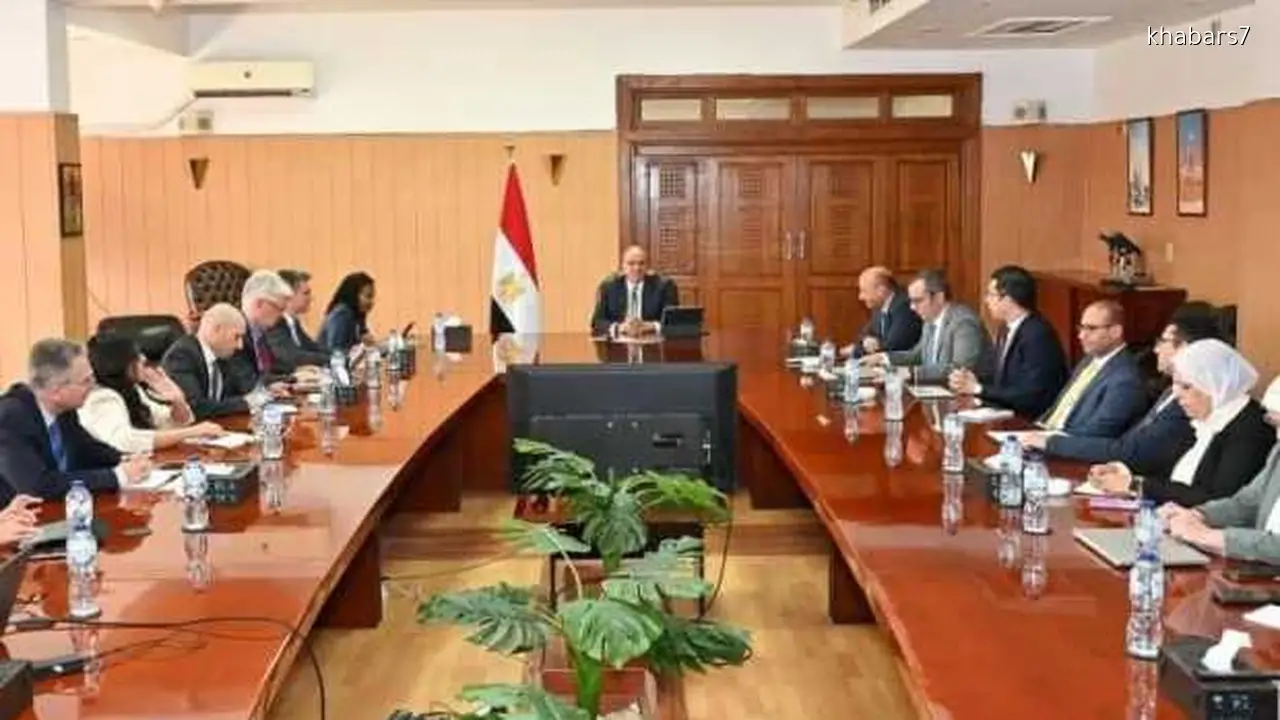
Dr. Hani Sewilam, Egypt’s Minister of Water Resources and Irrigation, held a meeting with Meskirem Berhan, the World Bank’s Regional Director for Sustainable Development in the Middle East, North Africa, Afghanistan, and Pakistan, along with her accompanying delegation. The meeting aimed to strengthen strategic cooperation between Egypt and the World Bank in areas such as water management, climate change adaptation, and sustainable development.
During the meeting, Dr. Sewilam emphasized Egypt’s appreciation for its long-standing partnership with the World Bank and acknowledged the organization’s role in supporting development efforts. He noted that the visit comes at a critical time given the increasing global challenges facing the water sector and the need to enhance practical cooperation based on implementation, financing, and technical support.
Dr. Sewilam reviewed Egypt’s water situation, stating that over 98% of its water supply relies on the Nile River. He highlighted severe limitations in rainfall rates and indicated that per capita water availability has dropped to approximately 490 cubic meters annually, while annual water needs are around 120 billion cubic meters.
The minister outlined significant efforts by the Egyptian government to bridge the gap between water resources and needs through an integrated set of measures. These include expanding wastewater recycling and agricultural drainage treatment, as well as utilizing virtual water by importing part of food requirements to enhance both water and food security while improving resilience against future challenges.
He also discussed national efforts to bolster water security and adapt to climate change through implementing the second generation of Water System 2.0 as part of Egypt’s National Water Resources Plan 2037 and National Water Strategy 2050. This strategy aims for more efficient and sustainable management of water resources by leveraging digital transformation, predictive analytics, intelligent systems for decision-making, enhancing governance, upgrading water infrastructure, improving water quality, and expanding unconventional water resources.
The meeting also covered initiatives to create and activate user associations for water management, which have grown to over 6,400 associations. These entities play a crucial role in participatory water management by grouping beneficiaries within defined areas. They manage irrigation waters collaboratively among stakeholders while addressing fragmentation in land holdings through joint crop selection and shared agricultural equipment use.
Dr. Sewilam noted that over recent years, Egypt has launched several major national projects focused on wastewater treatment and reuse. Notable projects include those at Bahr El-Baqar and Al-Mahsama which have significantly increased capacities for reusing water to support agricultural development and sustainable resource management. He emphasized that these projects serve as pioneering models for addressing water scarcity challenges effectively.
The discussion also touched on the World Bank’s “Water Forward” initiative and a proposed “Water Compact.” Dr. Sewilam expressed Egypt’s willingness to support initiatives aiding countries facing water scarcity but stressed that such initiatives must align with national priorities and focus on execution, financing capabilities, technical support, and capacity building. The meeting concluded with an examination of Egyptian technical feedback on a reference document prepared by the World Bank to ensure it accurately reflects Egypt’s current realities in the water sector along with ongoing efforts.
In closing discussions included potential areas for future collaboration under the Water Compact framework such as developing irrigation systems, sustainably managing groundwater resources, expanding unconventional water sources, enhancing private sector engagement in projects related to wastewater treatment and reuse, digital transformation in water management systems, strengthening climate adaptability measures, and improving water infrastructure—all aimed at ensuring Egypt achieves its goals for water security and sustainable development.
Comments