

Comprehensive Measures Proposed to Reform Egypt’s Educational System
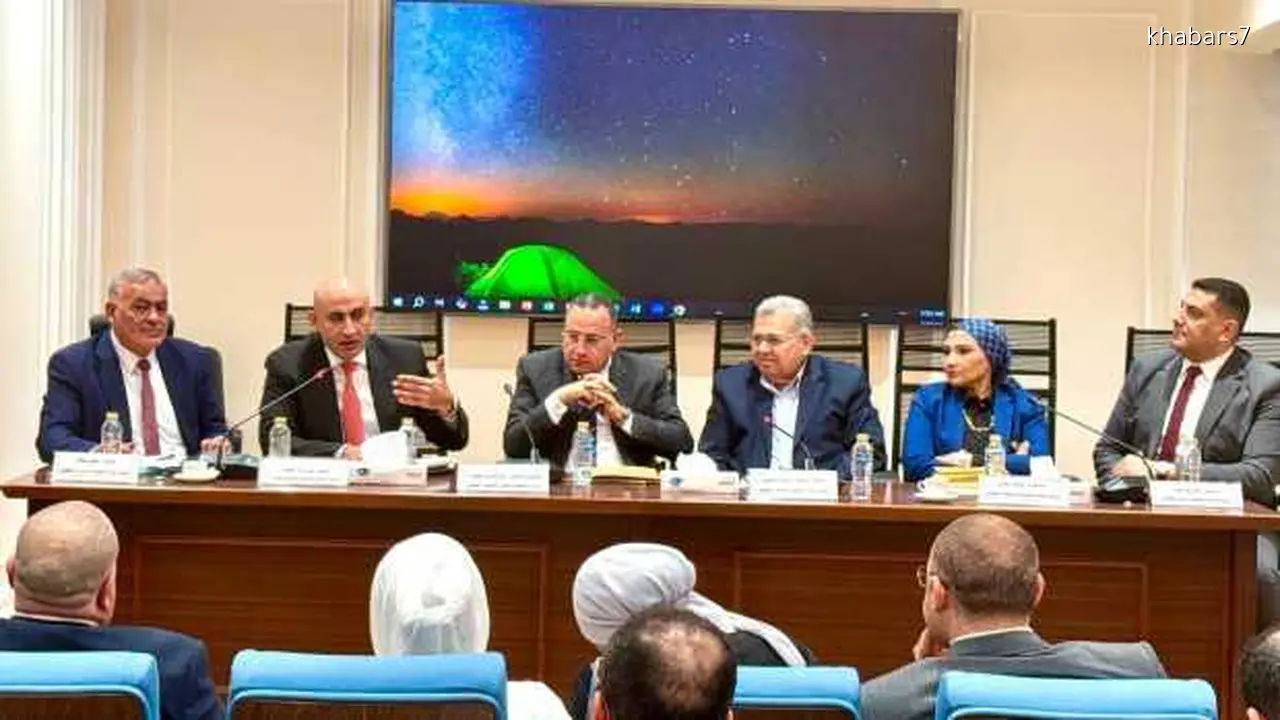
Mohamed Abdel Latif, Egypt’s Minister of Education and Technical Education, participated in a session of the Education and Scientific Research Committee at the House of Representatives, chaired by Dr. Ashraf El-Shehhi. The session focused on reviewing efforts to develop the technical education system and integrate the plans of both the Ministry of Education and the Ministry of Higher Education and Scientific Research to align graduates with labor market needs.
Also present were committee members, including Deputy Magda Bakry and Deputy Lotfy Shahat, alongside Ahmed Abdel Meguid, the committee’s secretary. From the Ministry of Education, Dr. Ayman Bahaa El-Din, Deputy Minister; Walid Maher, Director General of Political Communication and Parliamentary Affairs; and Shadi Zalta, the media advisor and official spokesperson for the ministry, were in attendance.
At the beginning of the meeting, Minister Abdel Latif expressed his appreciation for the committee’s role in supporting educational development. He emphasized the importance of collaboration between executive and legislative branches to achieve public interest and improve education quality. He praised the constructive discussions within the committee on various educational issues as essential for developing educational policies that respond to students’ needs and national development requirements.
Enhancing Reading and Writing Skills
Abdel Latif stressed that any genuine improvement in technical education must occur within a comprehensive reform of the entire educational system. He highlighted that foundational skills in reading, writing, and arithmetic are crucial for building future competencies.
The minister noted that the ministry has adopted a comprehensive package of reform measures to tackle longstanding challenges affecting educational quality, including overcrowded classrooms, teacher shortages, and inconsistent student attendance.
He reported that these reform efforts have significantly increased student attendance rates from approximately 15% to 87%, creating a more stable learning environment in classrooms. Additionally, class sizes have been reduced to fewer than 50 students per class, facilitating better teaching conditions.
The minister pointed out that improved attendance has enabled teachers to implement weekly assessments regularly, ensuring continuous monitoring of student performance and measuring learning outcomes effectively. The ministry has also addressed shortages in teachers for core subjects.
Furthermore, classroom capacity has expanded by 20%, with 45,248 spaces repurposed as classrooms along with 53,496 previously unused spaces being utilized again.
These reforms have directly contributed to enhancing students’ fundamental skills—an essential indicator used worldwide to evaluate educational systems’ efficiency.
In this context, he mentioned that results from the National Program for Developing Arabic Language Skills showed significant improvements in reading and writing abilities among students. According to UNICEF’s study on education reform efforts conducted across three phases in ten governorates each time, students struggling with these skills decreased from 45.5% in phase one to 32.4% in phase two and down to 13.9% in phase three.
Revamping Curriculum
The minister explained that an extensive overhaul of school curricula has taken place recently with updates made to 94 subjects while maintaining targeted learning outcomes. The focus was on simplifying content presentation methods to make them clearer and more relevant to students’ actual needs.
This year marks the first time evaluation booklets accompanying textbooks have been introduced to encourage continuous practice among students without imposing additional financial burdens on state budgets. For the first time, the ministry holds full intellectual property rights over these educational materials ensuring sustainable development and updates moving forward.
Introduction of Programming with Japanese Collaboration
In preparing students for future skills demands, Abdel Latif noted that first-year secondary students will study programming and artificial intelligence this year through Japan’s specialized “KIRYO” platform. They will undertake an internationally recognized test measuring digital skills.
The minister added that students who complete their second semester will receive accredited certificates from Hiroshima University in Japan reflecting high-quality educational content aligned with international standards.
Collaboration with International Baccalaureate Organization
Regarding Egypt’s Baccalaureate system, he stated that cooperation with the International Baccalaureate Organization (IBO) is underway to review educational frameworks and assessment methods used in several developed textbooks under this system.
Focus on Technical Education
Concerning technical education reforms achieved recently at pre-university levels are necessary groundwork for advancing technical education further. The minister emphasized that building a robust technical education system begins with preparing students equipped with essential learning skills needed for productivity and innovation.
He pointed out that education is closely linked to economic development; enhancing national economic competitiveness requires attracting foreign investments while boosting export rates—both necessitate skilled labor trained according to international standards. The challenge of providing qualified personnel for labor markets is significant across nations highlighting technical education’s pivotal role as it prepares human capital capable of meeting local and global market needs.
225 Applied Technology Schools Next Year
The minister confirmed successful implementation of government program targets set for developing technical education by exceeding announced goals noting rapid growth in applied technology schools over recent years—with governmental goals aiming for 200 such schools by 2030 while projections indicate around 225 schools will be operational by next academic year reflecting substantial expansion within this educational model linked closely with private sector demands.
The ministry seeks insights from successful international models through strategic partnerships with leading nations like Italy and Germany regarding enhancing technical education approaches.
Distinguished International Partnership with Italy
The collaboration with Italy includes leveraging outstanding models such as Don Bosco schools alongside higher technological institutes (ITS), focusing on integrating industrial partners as key stakeholders within both educational/training processes.
The minister noted Egypt now possesses one of largest international cooperation frameworks concerning technical education alongside Italian partners while also exploring new collaborative opportunities involving countries participating at Mediterranean vocational/technical education forums including Germany/Spain amongst others.
The ministry plans starting next academic year teaching programming/AI courses within technical education after providing tablet devices emphasizing these skills are crucial life competencies needed within modern job markets today.
The minister affirmed studying programming extends beyond merely coding; it enhances critical thinking abilities enabling students analyze problems effectively organize thoughts systematically make informed decisions—skills increasingly essential within today’s digital employment landscape.
Inclusion of Financial Literacy Course
The minister also mentioned introducing financial literacy courses into second-year secondary school activities starting next academic year (2027) aimed at boosting economic awareness among students preparing them navigate contemporary economic realities while gaining practical experiences related investment management entrepreneurship stock trading activities etc.,.
Abolishing Afternoon Shifts in Primary Schools
The Minister confirmed plans targeting gradual elimination afternoon shifts by 2027 through expanding new school/classroom construction particularly at primary level contributing towards reducing overcrowding providing improved learning environments for pupils overall.
Comments