

Italian Education Minister Highlights Partnership with Egypt at Mediterranean Forum
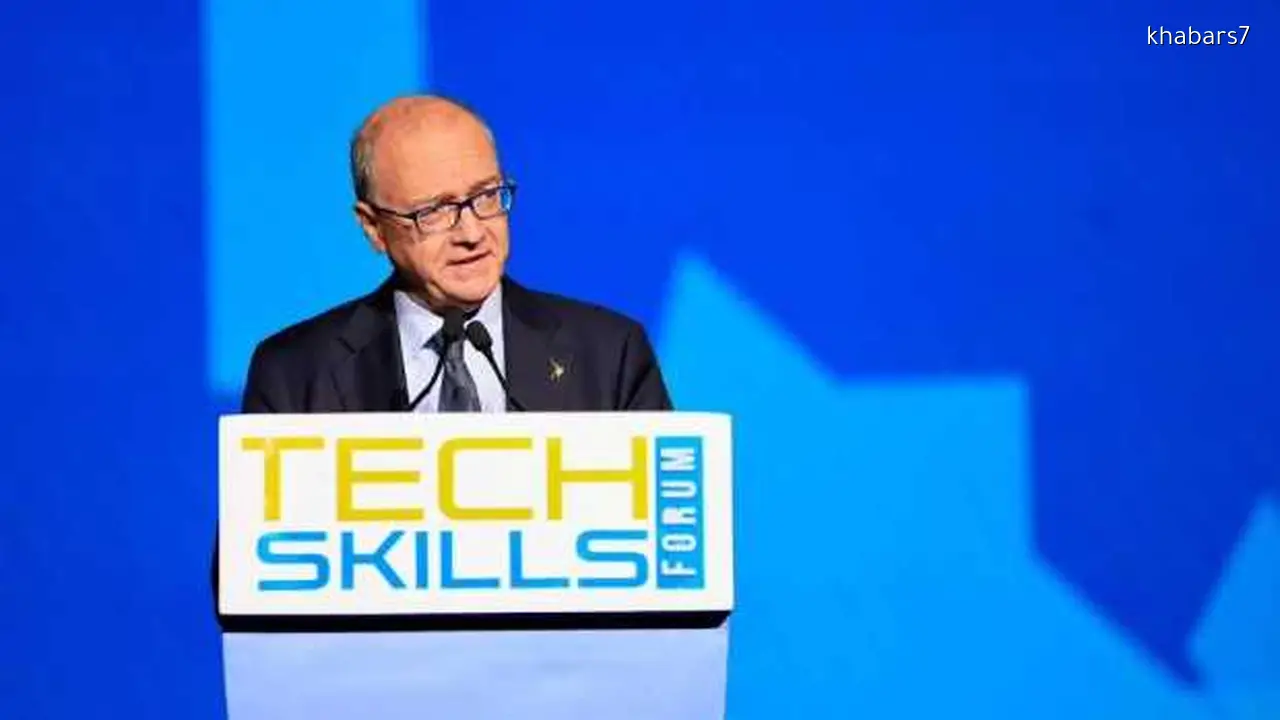
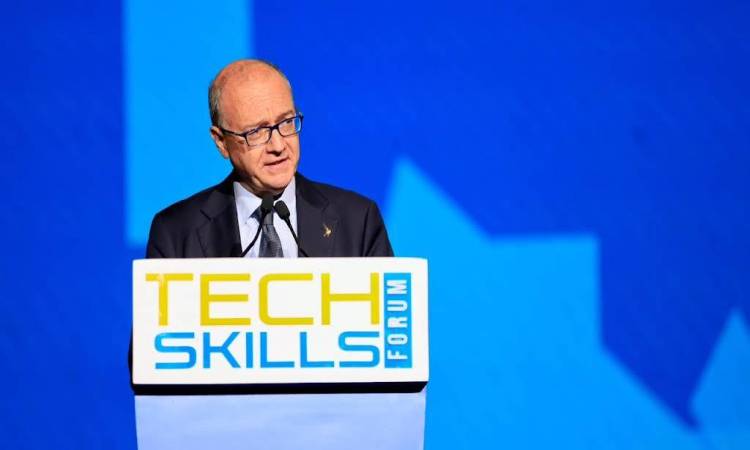
Dr. Giuseppe Valditara, Italy’s Minister of Education and Merit, expressed his delight at the opening of the first Mediterranean Technical and Vocational Education Forum and Exhibition, held in partnership with Egypt’s Minister of Education and Technical Education, Mohamed Abdel-Latif. He emphasized that this joint initiative reflects a vision based on dialogue and mutual trust between the northern and southern shores of the Mediterranean.
The forum kicked off today in the New Administrative Capital, running from June 5 to June 6. This inaugural event aims to establish sustainable developmental partnerships between African and Mediterranean countries, enhancing cooperation in technical and vocational education and training. The focus is particularly on applied technology schools and developing future skills necessary for digital transformation.
Valditara noted that the extensive participation in the forum underscores its strategic value and influence, highlighting a shared belief that the significant transformations and challenges facing the world today necessitate cooperation, solidarity, shared responsibility, and a unified vision for the future.
He pointed out that the world is experiencing profound and rapid changes driven by technological advancements such as artificial intelligence, alongside digital, energy, environmental transformations, and evolving labor markets characterized by an increasing demand for advanced skills that are reshaping economies and societies.
The Italian minister stressed that challenges of this magnitude cannot be addressed in isolation. He underscored the importance of collaborative efforts to achieve growth and progress. The forum serves not just as a platform for discussion or opinion exchange but as a strategic dialogue space among countries sharing a common interest in making the Mediterranean region a hub for development and progress. He asserted that this responsibility lies with everyone towards younger generations and the future of societies.
Valditara remarked that the Mediterranean is not just a geographical area but a community of peoples united by shared history, values, traditions, culture, and interconnected knowledge and economic systems. Historically, it has been a space for major civilizations as well as exchange, dialogue, knowledge sharing, and mutual growth.
He affirmed that the Mediterranean region retains its status as one of the world’s most strategic areas, serving as a natural bridge connecting Europe to Africa and the Middle East. This provides exceptional opportunities for cooperation, innovation, and development. He emphasized that there is a shared responsibility to leverage these potentials to build a stronger, more cohesive Mediterranean capable of innovation.
The topics discussed at the forum include artificial intelligence, emerging technologies, digital skills, smart manufacturing, automation, tourism, food industries, and readiness for future jobs. These reflect a collective determination to invest in new generations and skills that shape the future as pivotal elements in the 21st century.
Valditara highlighted the importance of building a Mediterranean region capable of generating innovation and achieving economic development. He noted that schools and vocational training institutions play a crucial role in realizing this goal.
He explained that these institutions’ role extends beyond knowledge transfer; they also support personal growth and social mobility while contributing to human capital development and skill exchange to provide job opportunities for youth and enhance business sector competitiveness.
The Italian minister expressed his country’s readiness to share its distinguished experiences in technical education and vocational training. He emphasized Italy’s ability to combine its rich cultural heritage with technological innovation.
Valditara also presented Italy’s innovative reform model in technological education through its “4+2” system alongside higher technical institutes. This model enhances connections between education and labor markets while fostering personal skill development, supporting innovation and scientific research while maintaining focus on individual needs within educational missions.
He concluded by stating that the forum’s motto “Skills That Shape the Future” is not merely symbolic but reflects a cultural strategy placing human beings, education, and skills at the heart of human progress across social and economic realms.
In closing his remarks, Valditara expressed confidence that discussions during this two-day forum will enhance dialogue among participating countries while fostering new forms of collaboration in education, training technologies, skills development, and human capital enhancement.
Comments