

Germany Supports Quality of Egyptian Technical School Graduates Amid Global Labor Market Demand
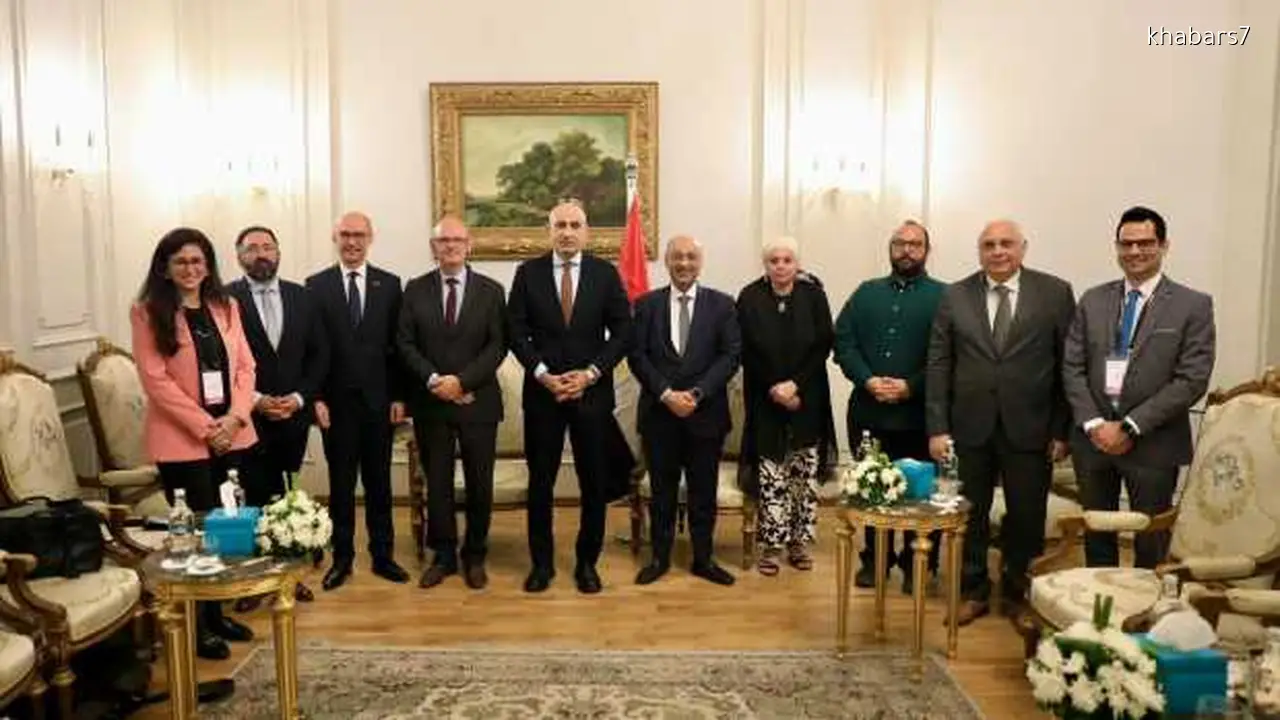
Meeting of the Minister of Education with a German delegation at the Mediterranean Education Forum.
Mohamed Abdel Latif, Egypt’s Minister of Education and Technical Education, met with Christian Benning, head of training at the Stuttgart Chamber of Skilled Crafts in Germany (HWK Stuttgart), along with a German delegation to discuss ways to enhance collaboration in technical education and vocational training. The aim is to leverage German expertise in developing training systems that align with both local and international labor market requirements.
This meeting took place during the second day of the “Technical and Vocational Education Forum for Mediterranean Countries,” held in New Administrative Capital on June 5 and 6, with participation from 13 countries.
The German delegation included Andreas Adrian, coordinator for vocational education and labor market initiatives; Nader Nabil, project manager for the second phase of the Technical Vocational Education Initiative (TCTI II); Sieber Shaheen-Hild, senior advisor at the Federal Institute for Vocational Education and Training (BIBB); and Dr. Mona Ayoub, director of competencies and skills training at the German-Arab Chamber of Industry and Commerce (AHK).
Representing Egypt’s Ministry of Education were Dr. Ayman Bahaa El Din, Deputy Minister; and Dr. Amr Basila, head of the Central Administration for Technical Education Development.
During the meeting, Minister Abdel Latif emphasized the importance of utilizing advanced German experiences in implementing quality-driven vocational education systems. He noted that this collaboration would enhance educational outcomes to meet labor market needs while supporting national efforts to prepare skilled professionals equipped with essential skills across various economic sectors.
These efforts are part of an Egyptian-German technical school model being implemented through TCTI II, executed by the German Agency for International Cooperation (GIZ) on behalf of the German government in partnership with the European Union. The initiative aims to support Egypt’s efforts in developing technical education through improved school systems, advanced quality assessment standards, digital learning pathways, and better financial resource management.
Minister Abdel Latif also highlighted ongoing initiatives by his ministry to reform educational systems aimed at preparing students for future jobs through curriculum development, enhancing technological skills, and expanding artificial intelligence applications within educational processes.
He pointed out that there is a special focus on integrating AI concepts into various educational programs to keep pace with global technological shifts and prepare graduates with necessary future skills. Additionally, there will be an expansion in educational programs that provide students with internationally recognized certifications to bolster their competitiveness in local, regional, and international job markets.
The minister also discussed strategic cooperation between Egypt and Italy in technical education, mentioning significant steps taken including signing cooperation protocols with several Italian academies and institutions to establish 100 new applied technology schools across various disciplines according to international standards.
He affirmed that partnerships with the private sector are essential for developing technical education in Egypt. The success achieved by applied technology schools serves as a comprehensive model for cooperation between state entities and industry sectors. Such partnerships contribute to curriculum development, provide practical training opportunities for students on production sites, and participate in graduate evaluations ensuring alignment between educational outputs and actual labor market needs.
Christian Benning praised the Ministry’s efforts towards enhancing vocational education systems. He emphasized the importance of strengthening collaboration between educational institutions and industry sectors while exchanging expertise in training and professional development fields to prepare skilled professionals capable of meeting modern technological and industrial advancements.
The two sides discussed ways to strengthen partnerships between Egypt and Germany in vocational education and training while expanding areas of mutual cooperation that support educational system development. They aim to establish quality assurance standards that align with international benchmarks to equip skilled personnel capable of fulfilling both local and global labor market demands amidst rapid technological changes.
Discussions also focused on building strategic partnerships with leading German institutions specializing in quality assurance, accreditation, and evaluation processes that would enhance Egyptian competitiveness while preparing them adequately for local and international job markets.
The members of the participating German delegation expressed their appreciation for the Ministry’s efforts toward developing technical education systems in Egypt, commending progress made in implementing development projects as well as expanding partnership models with private sectors.
Comments