

Egypt to Celebrate World Environment Day 2026 with Commitment to Climate Action

Dr. Manal Awad, Egypt’s Minister of Local Development and Environment, announced the country’s participation in the global celebration of World Environment Day 2026, which falls on June 5 each year. This year’s event will be hosted by Azerbaijan under the theme “The Planet Does Not Argue… It Does Not Negotiate… It Sends Signals,” focusing on climate change as one of the most pressing challenges at both global and national levels.
Dr. Awad emphasized that Egypt’s involvement in this global event reflects a clear national message calling for urgent action. She noted that climate changes are no longer mere future warnings but have become a tangible reality requiring immediate and coordinated efforts from governments, institutions, the private sector, civil society, and individuals.
In conjunction with this occasion, the Minister announced the completion of Egypt’s “Fourth National Communication” report, which has been published on the United Nations Framework Convention on Climate Change website. This step highlights Egypt’s commitment to climate transparency and its international presence, showcasing progress in implementing national climate policies and reinforcing Egypt’s role as an active partner in global climate action.
Dr. Manal Awad outlined various activities planned for this celebration, including an awareness campaign across the ministry’s social media platforms aimed at raising environmental awareness about the causes and impacts of climate change and the importance of adopting sustainable practices. The ministry will also organize seminars and educational workshops in schools, universities, and cultural centers, as well as cleanliness campaigns and tree planting initiatives to support adaptation efforts to climate change, foster environmental culture, and encourage community participation in protecting the planet.
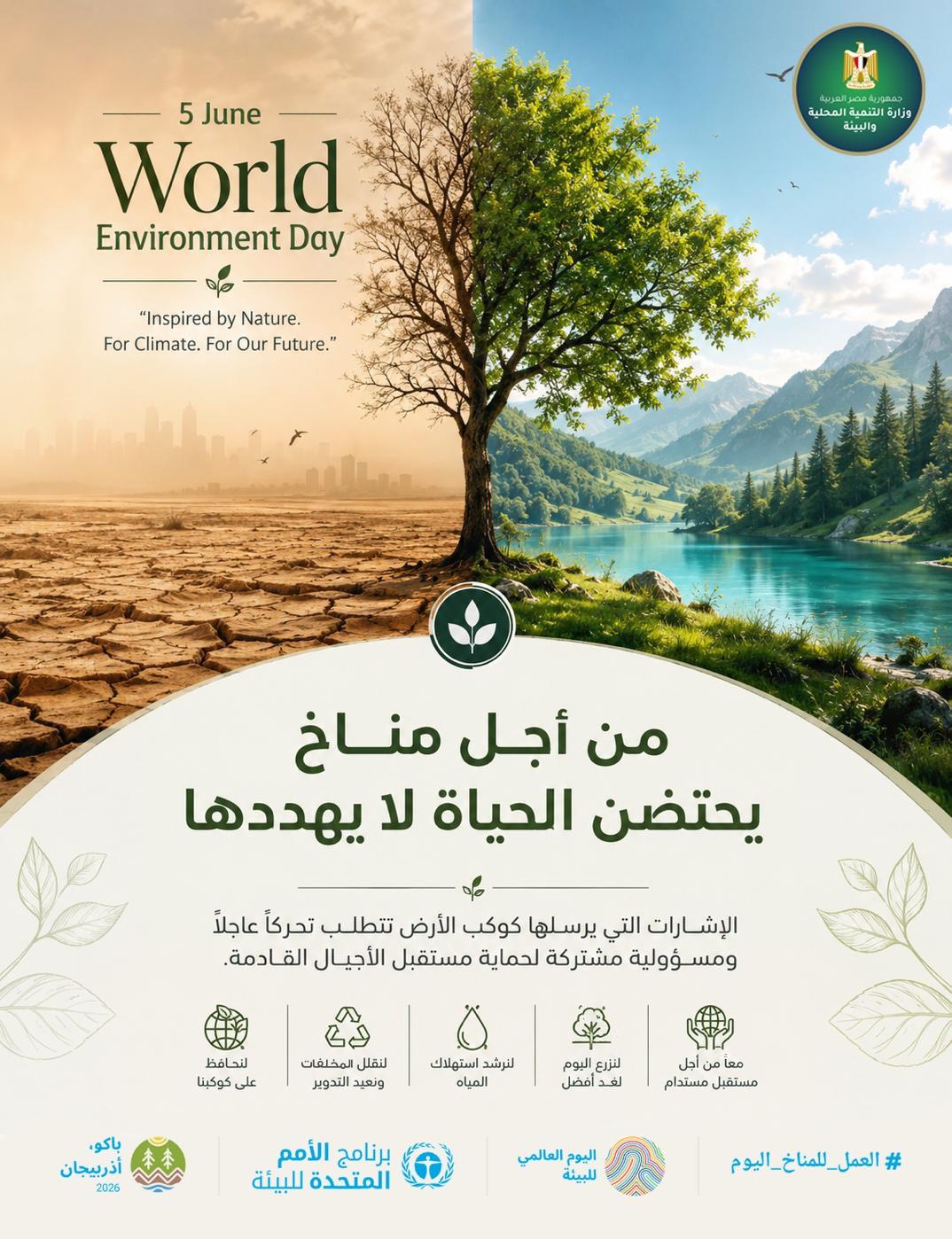
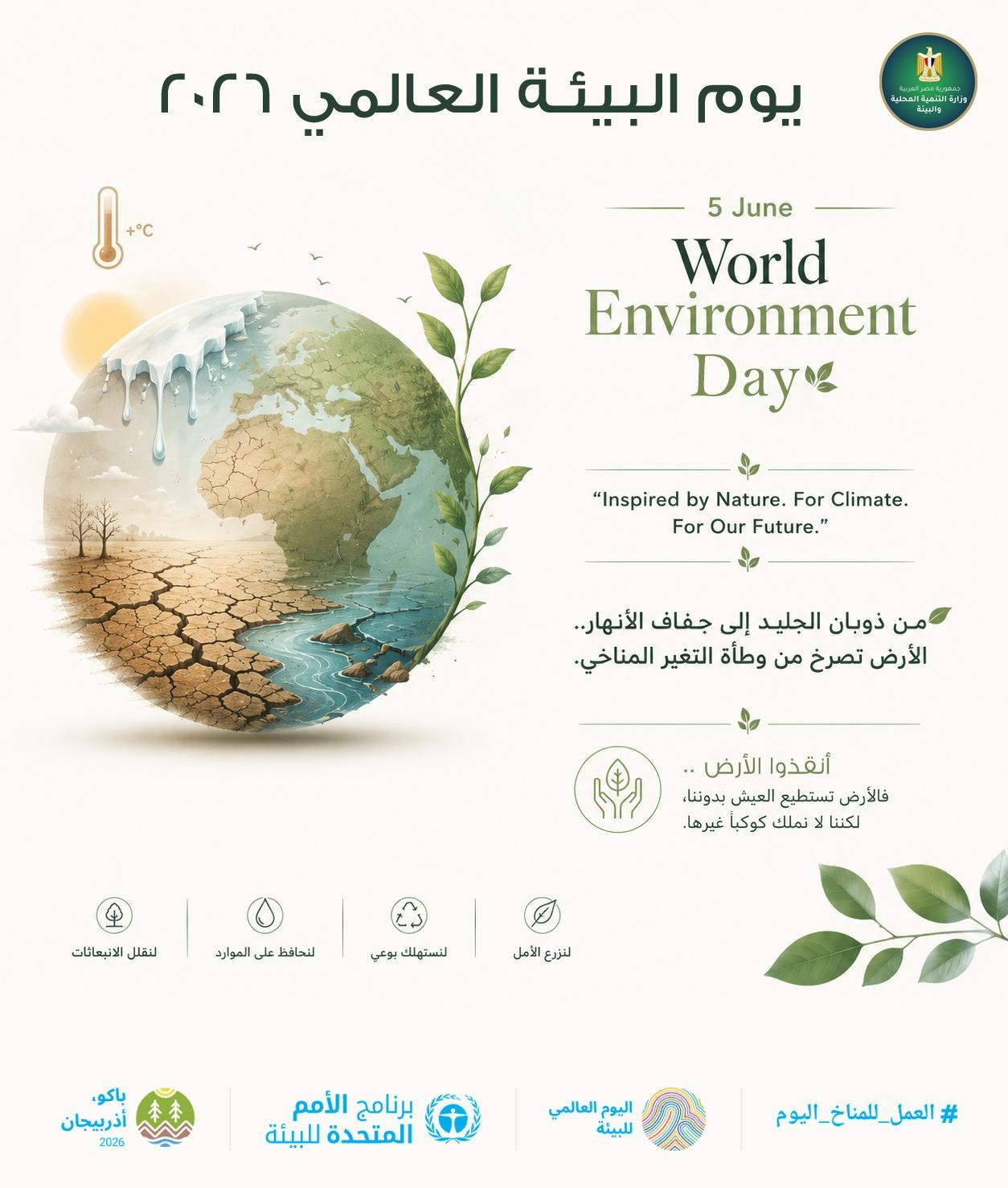
The Minister highlighted that World Environment Day serves as an opportunity to renew global commitment to climate goals and sustainable development while strengthening partnerships among governments, the private sector, and civil society. This supports more effective actions to reduce emissions, conserve natural resources, and enhance communities’ ability to adapt to the impacts of climate change. Dr. Awad noted that Egypt joins the world in celebrating this occasion amid rapid steps to enhance sustainable development pathways, expand green projects, and support adaptation efforts against climate change effects that have become one of the largest global challenges.
Dr. Manal Awad reviewed Egypt’s efforts from 2014 to 2026 in making significant advancements in addressing climate change by establishing a comprehensive national framework for climate action that integrates policies, legislation, financing, and developmental projects aimed at enhancing the country’s capacity to confront climate change impacts while achieving sustainable development goals.
She further explained that one of the key institutional steps taken by Egypt was restructuring the National Council on Climate Change in 2019 under the chairmanship of the Prime Minister with representatives from relevant ministries, private sector stakeholders, and civil society organizations. This move has improved coordination among national entities involved in climate governance. The Minister also mentioned launching the National Climate Change Strategy 2050 as a governing framework for climate action in Egypt aimed at achieving sustainable low-emission economic growth while enhancing resilience and governance frameworks for climate initiatives.
Additionally, Dr. Awad stated that her ministry has developed a financing mechanism for climate projects through the “Transforming Financial Systems for Climate in Egypt” project and launched an Environmental and Climate Investment Unit aimed at opening new avenues for green investment while stimulating private sector investments in green economy sectors. This includes circular economy initiatives while coordinating with national entities and financial institutions to maximize incentives for financing opportunities that encourage investments in green sectors.
In terms of enhancing legislative frameworks, Dr. Awad pointed out ongoing discussions regarding integrating a special chapter on climate change into amendments of environmental laws to facilitate incorporating climatic considerations into various development sectors contributing toward low-emission development pathways while enhancing adaptation capacities against climatic risks.
The Minister noted that Egypt has successfully mobilized substantial international funding for supporting climate initiatives; her ministry was able to secure €702.4 million from the Global Green Bonds Initiative which contributes toward reducing approximately 10 million tons equivalent of carbon dioxide emissions while providing direct and indirect benefits to millions through adaptation measures.
Furthermore, Dr. Manal Awad indicated that Egypt has updated its Nationally Determined Contributions (NDCs) multiple times aiming at raising ambition levels on climate action while increasing reliance on renewable energy sources. The final draft of its third NDC update has been completed along with launching a project focused on developing a National Adaptation Plan as well as a Low Emission Development Strategy for 2050.
The Minister highlighted that Egypt submitted its first transparency report covering two years to the Secretariat of the United Nations Framework Convention on Climate Change (UNFCCC), implemented by her ministry in collaboration with UNDP with funding from the Global Environment Facility (GEF). This report aids in inventorying emissions across different sectors while enhancing Egypt’s adaptation capacity against climatic changes alongside presenting evaluations regarding progress made towards implementing NDCs.
Dr. Manal Awad affirmed that Egypt’s first transparency report submitted in 2025 marks a significant milestone toward strengthening national governance systems on climate accountability where it demonstrated a reduction of emissions by 34.34% within its electricity sector compared to business-as-usual scenarios approaching its target reduction goal of 37% by 2030. Meanwhile, both oil & gas sector recorded reductions estimated at around 57% against baseline scenarios while transport sector exceeded emission reduction targets by achieving an 18.84% reduction compared against current expectations exceeding its goal set for reducing emissions by 7% by 2030.
The Minister revealed that her ministry successfully established units dedicated to addressing climatic changes within eighteen national entities while implementing a digital monitoring reporting verification system (MRV) together with World Bank cooperation alongside German cooperation agency initiatives; additionally completing phases one & two concerning interactive mapping related climatic risks extending until year 2100 which will be accessible during Q4 this year aiding decision-makers & investors identify areas most vulnerable towards climatic hazards.
In conclusion, Dr. Manal Awad reiterated that World Environment Day conveys an ongoing message underscoring environmental protection is no longer optional but essential towards ensuring both development rights & safe living conditions for present & future generations emphasizing responsibility does not solely rest upon governments but begins with daily behaviors exhibited among individuals extending towards state policies along with private sector investments & community involvement stressing decisions made today will determine our planet’s future tomorrow.
Comments