

Egypt’s Minister of Military Production Highlights National Priority of ‘Decent Life’ Projects
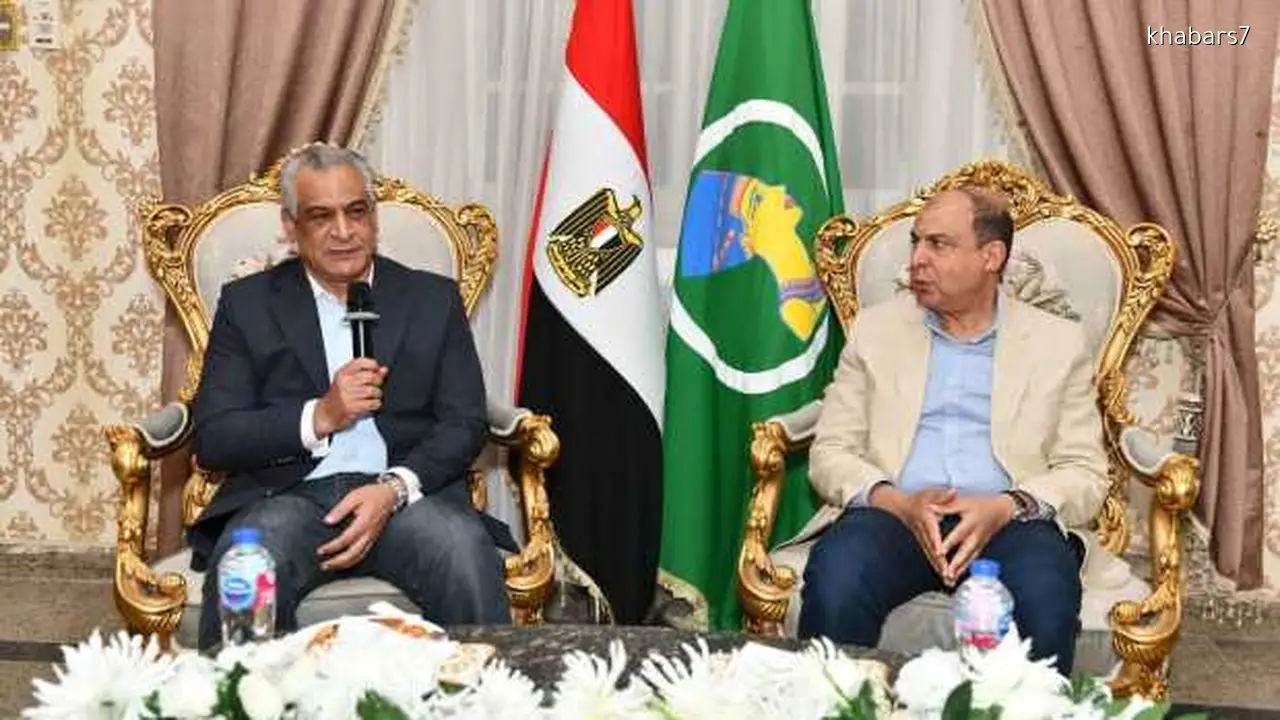
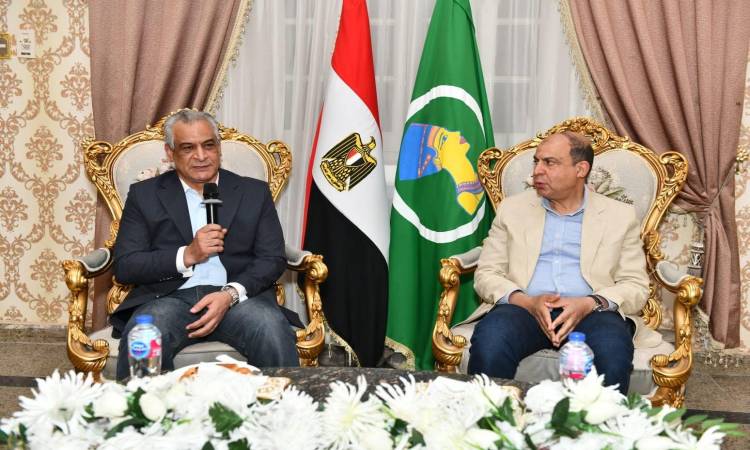
جانب من اللقاء.
Dr. Salah Suleiman Jumblatt, Egypt’s Minister of Military Production, recently conducted a field visit to monitor the latest developments on several projects being executed by military production companies in Minya Governorate as part of the presidential initiative “Decent Life.”.
Accompanying the minister were Imad Kdwan, the Governor of Minya, along with various leaders and officials from the ministry, the National Authority for Military Production, and other relevant bodies, including members of both houses of Parliament.
During his visit, Jumblatt emphasized that the Ministry of Military Production places significant importance on projects under the “Decent Life” initiative, viewing them as a national priority and one of the most vital national projects in Egypt’s history. He highlighted the initiative’s role in improving citizens’ living standards by providing integrated services and infrastructure that support sustainable development efforts.
He noted that these projects are continuously monitored by President Abdel Fattah El-Sisi and Prime Minister Mostafa Madbouly to ensure their timely completion and maximize benefits for Egyptian citizens.
Jumblatt praised Minya’s notable progress in implementing projects across various sectors by utilizing all available technical and engineering expertise.
Governor Kdwan remarked that the first phase of the initiative in Minya is one of the largest comprehensive development programs in the governorate, encompassing 3,199 projects across diverse service and development sectors to benefit over three million citizens, thus achieving a qualitative leap in services provided to rural residents.
He added that executive bodies are regularly monitoring project implementation rates in coordination with relevant entities to expedite remaining works and deliver completed projects for operation to maximize citizen benefits.
The Minister began his tour at the Delga Treatment Plant in Deir Mawas, where he reviewed ongoing works, including civil work completion and initiation of building construction, along with updates on supply and installation for electromechanical works and targeted achievement rates for upcoming periods.
Jumblatt pointed out that water and sanitation sectors have witnessed unprecedented growth over recent years and are prioritized within national comprehensive development plans due to their direct impact on citizens’ quality of life.
The minister also assessed several ongoing projects in Minya, such as lifting stations (Al-Barsha – Deir Al-Barsha – Deir Abu Hens – Sheikh Abada) in Malawy. He reviewed completion percentages for discharge lines in these projects and stressed ensuring compliance with discharge line levels executed by a company through a specialized consultant from the owning entity to finish scheduled works without delays.
Additionally, he checked on updates related to civil and electromechanical works at the Bani Mohamed Sharawi lifting station project in Malawy, urging swift provision of necessary requirements for ongoing work completion within this project framework.
In conjunction with this, Jumblatt followed up on measures taken with relevant entities regarding the Kom Al-Zuhair lifting station project in Abu Qurqas to finalize fire protection requirements related to electricity company transformer rooms. A final inspection is expected soon to enable power connection.
The minister also reviewed progress at Al-Nasr Station (6) in Abu Qurqas and plans for its further completion alongside updates on civil and electromechanical works implemented under Kafr Al-Maghrabi treatment plant project in Al-Adwa.
During his tour, Jumblatt issued directives for detailed timelines for all remaining works at each site while continuing daily performance monitoring. He emphasized intensifying field visits and presenting precise periodic reports on project execution status to facilitate prompt decision-making.
He reiterated that work would continue around the clock to enhance achievement rates while fully adhering to approved technical specifications. Any delays would not be tolerated; necessary actions against non-compliant contractors would include terminating contracts and reallocating tasks to other capable entities capable of meeting required performance standards—ensuring no adverse impacts on project execution rates.
Concluding his field visit, Jumblatt noted that this tour is part of a series aimed at monitoring “Decent Life” projects implemented by military production companies across various governorates. He highlighted the importance of promptly addressing challenges faced during implementation through coordination with relevant authorities. Regular field monitoring remains one of the essential tools for ensuring compliance with timelines and achieving state developmental targets.
Comments