

Higher Education Minister Highlights Technological Education Development in Egypt
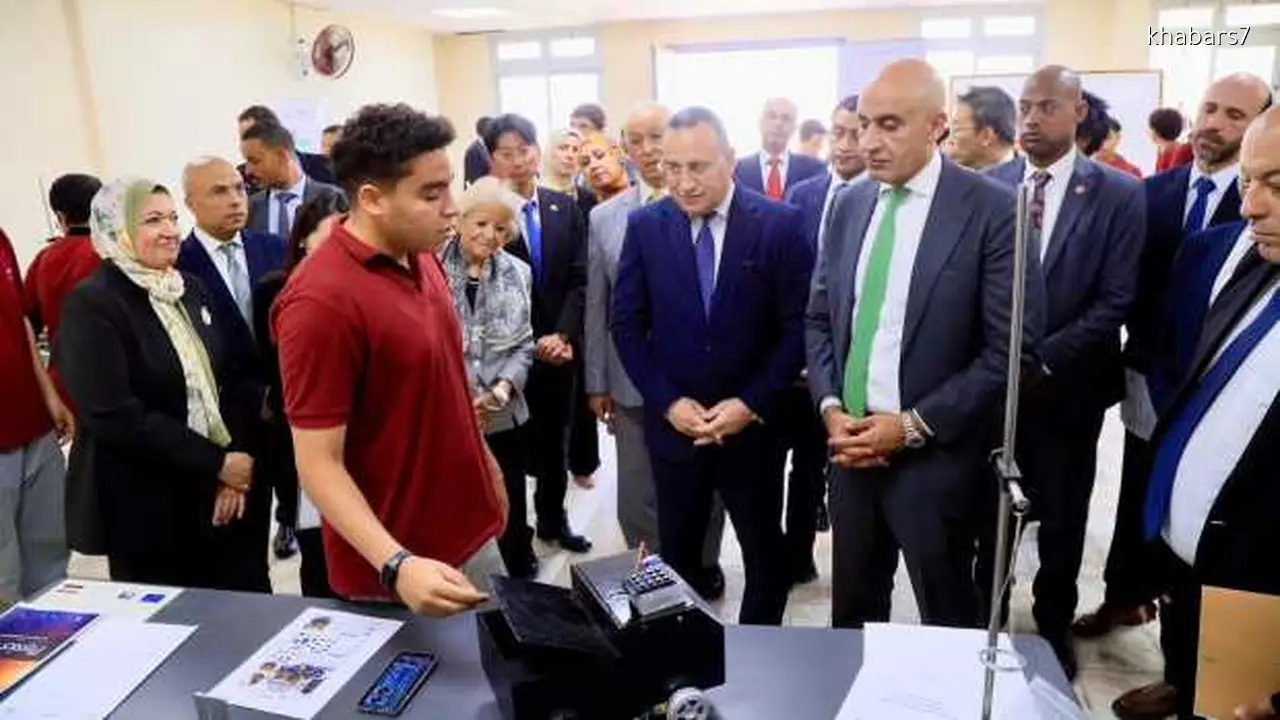
Dr. Abdel Aziz Qansoua, Egypt’s Minister of Higher Education and Scientific Research, emphasized the significant collaboration between Egypt and Japan in advancing technological education during a recent visit to the Egyptian-Japanese Kosen Institute.
The visit was attended by Mohamed Abdel Latif, Minister of Education and Technical Education; Yuko Mitsui, First Vice President of the Japan International Cooperation Agency (JICA); and several other officials, including Ambassador Faiza Abou El-Naga, advisor to the President on National Security. They toured the institute located in 10th of Ramadan City to monitor educational processes and training activities.
Also present were Dr. Rasha Sherif, Secretary-General of the Education Development Fund; Dr. Hani Helal, Secretary-General of the Egyptian-Japanese Educational Partnership; Dr. Ayman Farid, Assistant Minister of Higher Education; and Dr. Ahmed El-Gohary, former president of the Egyptian-Japanese University for Science and Technology. The delegation included representatives from the Japanese embassy in Cairo and industry partners, showcasing a collaborative effort between state institutions and the industrial sector to enhance advanced technological education aligned with labor market needs.
Minister Qansoua highlighted the institute’s role in preparing qualified technical personnel through modern educational systems that cater to labor market demands while supporting Egypt’s sustainable development goals and knowledge-based economy.
He noted that the ministry is committed to enhancing technological education systems and strengthening international partnerships. He pointed out that cooperation with Japan has led to pioneering educational projects, including the Egyptian-Japanese University for Science and Technology and the Kosen Institute, which serve as successful models for knowledge transfer and capacity building, positioning Egypt as a regional hub for education and innovation in Africa.
Mohamed Abdel Latif expressed pride in the innovative advancements at Kosen Institute, stating it embodies Egypt’s vision for improving technical education standards to meet global competitiveness.
He praised the institute’s educational philosophy based on applying Japanese standards in quality and problem-solving learning (STEM), integrating continuous improvement methodologies into academic performance. He commended Kosen for offering unique technological pathways that address national industry needs, particularly in computer science, robotics, green energy, and microelectronics, thereby bridging skill gaps between engineers and technicians.
Yuko Mitsui expressed her appreciation for the ongoing collaboration between Japan and Egypt in education. She affirmed that Kosen serves as an exceptional platform for sharing Japanese expertise in engineering and advanced manufacturing innovation to prepare skilled personnel capable of meeting diverse industrial sector needs.
Mitsui highlighted the continuous growth of educational partnerships between both nations, noting that successes from joint educational initiatives reflect strong bilateral relations and mutual trust. She added that JICA is eager to continue collaborating with Egyptian institutions to support human resource development while transferring Japanese expertise in technological education, innovation, and industrial development.
Dr. Rasha Sherif reiterated that Kosen Institute is one of the strategic projects of the Education Development Fund under the Prime Minister’s Office. It embodies the fund’s vision for transforming education through innovative models based on international partnerships linking education with production.
She emphasized that the fund is particularly focused on expanding Kosen’s model across Egypt in collaboration with international partners like JICA while actively involving industry stakeholders to achieve sustainable development goals by cultivating qualified human capital for future leadership roles.
During their visit, Dr. Ahmed El-Bandari presented a detailed overview of Kosen Institute’s philosophy linking theoretical education with practical application through simplified sciences and enhancing students’ creative skills. He thanked both ministers of higher education and education along with their Japanese counterparts for their ongoing support.
The visit included a tour around various facilities within the institute such as laboratories and training workshops while observing student projects showcasing advancements made through implementing Japanese educational practices in technological education within Egypt. Additionally, students performed a theatrical presentation titled “History of Egypt” alongside practical experiments in chemistry and physics as well as student projects related to software development, robotics, artificial intelligence applications among other scientific domains.
The Kosen Institute offers a five-year study program culminating in an advanced technological diploma across several modern disciplines tailored to labor market needs including artificial intelligence, computer science, robotics, mechatronics, green energy technologies like solar panels, and microelectronics—all following a Japanese educational model integrating academic study with hands-on training.
Comments