

Grand Mufti Emphasizes Need for Awareness and Conceptual Clarity in Modern Times
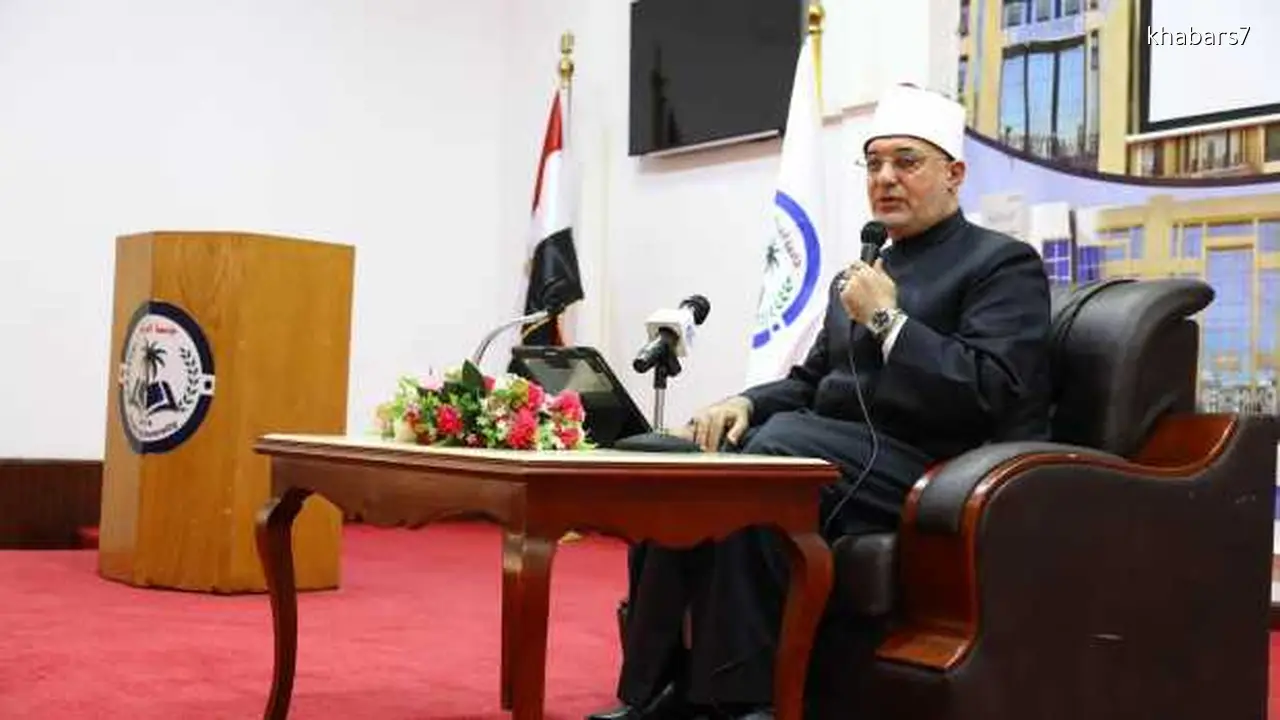
Grand Mufti of Egypt.
Dr. Nazih Muhammad Ayad, the Grand Mufti of Egypt and head of the General Secretariat for Fatwas Worldwide, stated that raising awareness and correcting misconceptions have become urgent necessities dictated by the current phase marked by rapid transformations and complex cultural conflicts. He noted that some forces are attempting to impose their views and dominance under various slogans and concepts.
During a lecture titled “The Modern State’s Approach to Raising Awareness and Promoting Moderate Thought to Combat Misconceptions” at Al-Arish University, attended by university president Dr. Ayman Al-Shabini, vice presidents, deans, faculty members, and students, Ayad emphasized that contemporary realities have given rise to numerous disruptions, contributing to the spread of distorted concepts affecting religion, nation, humanity, values, morals, and public behavior. He pointed out that some modern platforms have become tools for manipulating religious texts and their purposes, which has clearly impacted individuals’ behaviors and their attitudes towards the value system that underpins society.
The Grand Mufti highlighted that the erosion of moral values has led to a situation where respect is perceived by some as a sign of weakness, modesty is seen as backwardness, and kind words are viewed as regressive. In contrast, ideas and practices contrary to virtue and ethics are being promoted. He warned against assaults on national identity through the dissemination of concepts aimed at obliterating national character and undermining the essential components that distinguish each nation from others. Language was identified as a crucial element of identity; neglecting or belittling it risks losing an essential aspect of awareness and belonging.
He noted one of the most dangerous outcomes of contemporary reality is the isolation between individuals and their language, culture, and history. Speaking Arabic has come to imply inferiority or backwardness among certain groups while children increasingly communicate in a mix of languages that erode cultural specificity and national identity. He cautioned against mocking history or downplaying the significance of cultural heritage and achievements because vibrant nations view their history as a foundational pillar for building the future. Neglecting this cultural heritage negatively affects societies’ ability to progress.
According to Ayad, the nation is a primary component of identity that must be preserved and defended through financial resources, personal sacrifice, work, and development. He cautioned against destructive concepts emerging from what is termed “creative chaos,” which aim to distort the image of nation-states while undermining trust in their institutions. He explained that religion serves as a unifying framework governing relationships between individuals with God, themselves, others, and the universe around them. Divine messages were meant to establish these meanings and maintain balance in human life.
He stressed that addressing these challenges requires serious intellectual, scientific, and religious efforts amidst widespread unverified information circulating on social media platforms and artificial intelligence applications. While these technologies offer significant opportunities, they can also become tools for spreading rumors and distorting awareness if scientific standards are absent. He called for collaboration among educational institutions, cultural organizations, youth groups, and social entities to rebuild individuals’ understanding of religion, homeland, history, values, and ethics—contributing to security stability while preventing intellectual deviation leading to decline.
Ayad praised Egyptian state efforts across various institutions aimed at enhancing awareness levels while correcting misconceptions to reinforce sound instincts among individuals. He clarified that human development is an integrated process encompassing doctrinal beliefs alongside spiritual, ethical, psychological, and physical dimensions. Emphasizing self-purification and behavior correction is crucial alongside public health considerations such as combating drug abuse—all necessary for individuals to fulfill their civilizational roles effectively.
The Grand Mufti warned against trends aiming to strip religion of its essence under claims of ease or tolerance. He reaffirmed that Islam’s compassion does not equate with eliminating regulations or overriding established norms; rather it rests on principles safeguarding public order while protecting rights.
In conclusion, he underscored the importance of exercising reason while verifying information before sharing it due to potential severe repercussions stemming from rumors or false news affecting individuals’ reputations or societal cohesion—leading ultimately to community disintegration. He acknowledged the role played by academic centers in correcting misconceptions alongside confronting ideological deviations through initiatives led by Egypt’s Dar al-Ifta (House of Fatwa), including dialogue centers focused on family guidance disputes resolution efforts aimed at nurturing critical thinking while promoting balanced awareness aligned with public interest.
Dr. Ayman Al-Shabini expressed his deep appreciation for Grand Mufti’s visit stating that Al-Arish University prioritizes organizing scientific events contributing toward youth awareness building enhancing national allegiance reinforcing moderate values within society’s framework. He noted how insights shared during this lecture reflect vital roles played by religious institutions facing distorted ideologies amid modern intellectual challenges praising Dar al-Ifta’s efforts in raising prudent awareness correcting misconceptions ensuring sound ethical foundations underpinning developmental trajectories safeguarding community security stability.
Comments